
Explore copyright infringement challenges in 2025 with this complete legal guide covering rights, responsibilities, digital enforcement, and practical steps to prevent unauthorized content use.

Copyright infringement has become one of the most pressing legal issues in our digital world, where content can be copied and shared instantly across the globe.
According to Cornell Law’s 2025 review:
“The Digital Millennium Copyright Act (DMCA) strengthened copyright law in several areas to address new methods of digital infringement.”
ETB Law reports that:
“A study by MUSO found over 52.5 billion visits to piracy websites in Q1 2022, a 29.3% increase from Q1 2021.”
Understanding digital copyright protection has never been more critical. This comprehensive guide explains copyright infringement in the digital age, current digital copyright laws in 2025, online copyright protection mechanisms, and the fair use doctrine in cyber law.
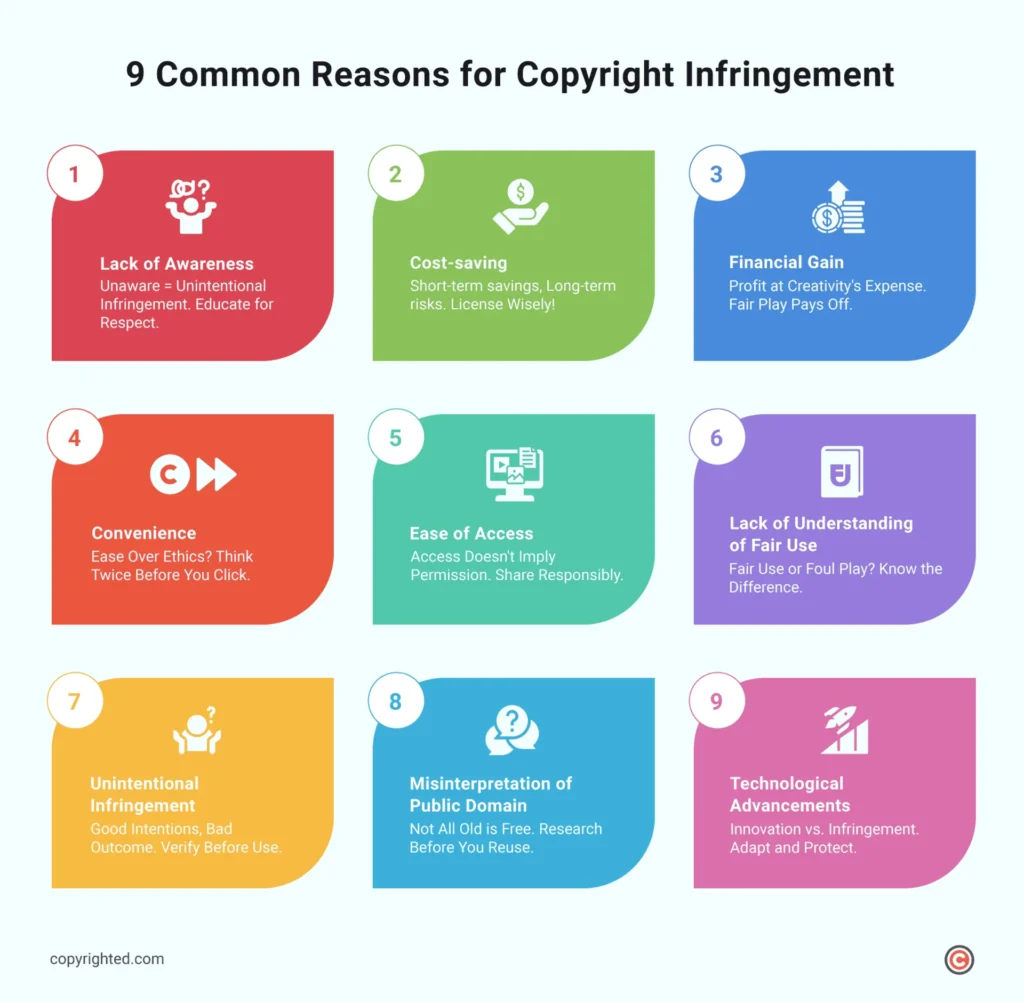
Source: Copyright Infringement
Understanding Digital Copyright Law in 2025
Digital copyright law protects original creative works published or distributed online, granting creators exclusive rights over how their content is used, reproduced, and distributed.
ScoreDetect’s 2025 analysis suggests that:
“Copyright law automatically protects original works like writings, music, films, photography, and software the moment they are fixed in a tangible form.”
What Digital Copyright Laws Protect
Copyright protection applies to virtually all original creative content online including written articles and blog posts, photographs and digital images, music recordings and compositions, videos and films, software code and applications, website designs and layouts, digital artwork and graphics, and podcasts and audio recordings.
According to UpCounsel’s copyright guide:
“Copyright protection on the internet provides the original authors and artists the right to prevent others from copying or taking the original work and claiming it as their own.”
The Five Exclusive Rights of Copyright Owners
ScoreDetect identifies five fundamental rights granted to copyright owners:
Reproduction Right: The exclusive right to reproduce and make copies of copyrighted work, including both physical and digital copies.
Adaptation Right: The exclusive right to create derivative works or adaptations based on the original, including translations, edits, and summaries.
Publication Right: The exclusive right to first publish the work publicly.
Distribution Right: The exclusive right to distribute copies to the public through sale, rental, lease, or lending.
Public Performance and Display Rights: The exclusive rights to perform works publicly and display copyrighted works publicly.
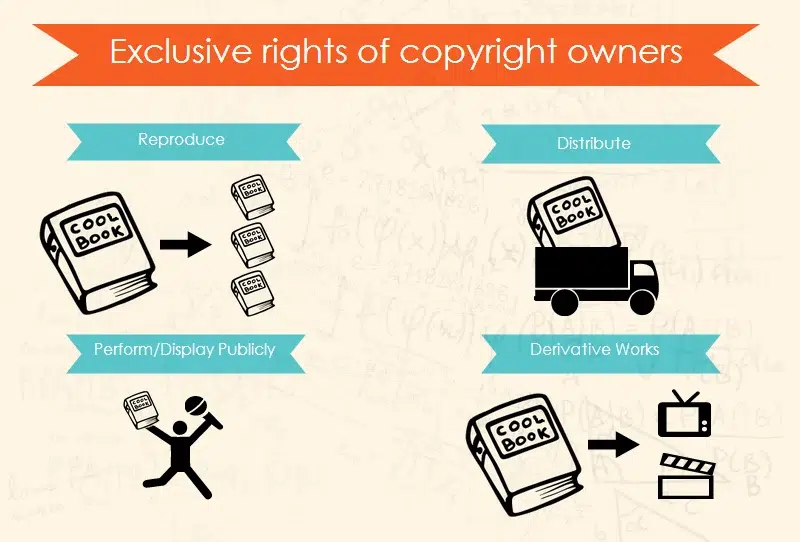
Source: Exclusive Rights of Copyright Owners
Automatic Protection vs. Registration
UpCounsel suggests that:
“Copyright protection online begins at creation; no registration is required for basic protection.”
However, registration with the U.S. Copyright Office provides the following crucial legal benefits:
- Establishes official ownership record
- Enables lawsuits for infringement
- Allows claiming statutory damages and attorney fees
- Creates public notice deterring infringement
- Provides access to Copyright Office legal assistance
Without registration, copyright owners can only claim actual damages, which are often difficult to prove and substantially lower than statutory damages that can reach $150,000 per work.
What Constitutes Digital Copyright Infringement
ETB Law suggests that:
“Digital copyright infringement occurs when someone uses, copies, or distributes digital content without the permission of the copyright holder.”
Common Forms of Online Copyright Infringement
Illegal Downloads and File Sharing: Sharing or downloading copyrighted music, movies, software, and books through peer-to-peer networks without authorization or payment.
Online Piracy: Distributing unauthorized copies of digital content, often for profit, through torrent sites, file-sharing platforms, or piracy websites.
Plagiarism: Copying text, images, or other media from the internet and claiming it as original work without proper attribution or permission. Digital Media Law Project clarifies that:
“The infringing use of a copyrighted work cannot be cured by attribution; citing the source doesn’t prevent copyright infringement.”
Unauthorized Streaming: Broadcasting copyrighted content through platforms like YouTube, Twitch, or unauthorized streaming sites without obtaining necessary licenses.
Website Content Theft: Copying and pasting substantial portions of articles, blog posts, or written works from websites without permission.
Image Theft: Using copyrighted photographs, graphics, or artwork on websites, social media, or publications without authorization or licensing.
Software Piracy: Distributing, installing, or using copyrighted software without proper licenses or in violation of licensing terms.
Proving Copyright Infringement
According to Digital Media Law Project, to successfully prove copyright infringement, plaintiffs must demonstrate:
- Ownership of a valid copyright or legal authority to sue
- That defendant actually copied the copyrighted work through either direct evidence or showing defendant had access to the work and substantial similarity exists
- That copied sections are protected by copyright (not merely facts)
If liability is established, copyright holders can recover actual damages or statutory damages between $750 to $30,000 per infringement, potentially reaching $150,000 for willful infringement.

Source: Digital Copyright Challenges
The Digital Millennium Copyright Act (DMCA) 2025
The DMCA, passed in 1998 and continually updated, remains the cornerstone of digital copyright protection.
U.S. Copyright Office explains that:
“The DMCA made three main updates addressing copyright and internet relationships.”
Anti-Circumvention Provisions
Wikipedia explains that:
“The DMCA criminalizes production and dissemination of technology, devices, or services intended to circumvent measures that control access to copyrighted works.”
The law prohibits:
- Circumventing access control measures (passwords, encryption)
- Manufacturing or distributing circumvention devices
- Providing services that enable circumvention
The University of Washington suggests that:
“Courts have held that if, in the ordinary course of its operation, a technology actually works in the defined ways to control access to a work, then it qualifies for DMCA protection.”

Source: Copyrighted.com DMCA
DMCA Safe Harbor for Online Service Providers
Section 512 of the DMCA shields online service providers (OSPs) from liability for user infringement if they meet specific conditions.
Georgetown University’s guide explains that OSPs must:
- Take certain steps when receiving infringement notices
- Adopt policies terminating repeat infringers
- Accommodate standard technical measures for copyright protection
- Designate agents to receive copyright notices
Educational institutions receive additional protections if faculty or student infringement doesn’t relate to required course materials, the institution hasn’t received multiple notices against that person, and the institution provides copyright information to users.
DMCA Takedown Notice Process
The DMCA established a “notice-takedown-putback” process.
Georgetown suggests that valid notices must include:
- Identification of copyrighted work being infringed
- Identification of infringing material and its location
- Contact information for the complaining party
- Good faith statement that use is unauthorized
- Statement that information is accurate under penalty of perjury
- Physical or electronic signature
Service providers must expeditiously remove infringing content upon receiving proper notice or lose safe harbor protection.
2025 Updates and Exemptions
Cornell Law’s September 2025 review suggests that:
“The Librarian of Congress conducts triennial rulemakings creating exemptions from circumvention prohibitions.”
Recent exemptions include security testing on video games and accessing works when access controls malfunction.
Fair Use in Cyber Law: Understanding the Doctrine
Fair use represents the most important defense against copyright infringement claims, allowing limited use of copyrighted material without permission for purposes society considers beneficial.
The Four Fair Use Factors
Courts analyze four statutory factors when determining fair use:
1. Purpose and Character of Use: Transformative uses that add new meaning, purpose, or character receive stronger fair use protection. Non-commercial, educational, or critical uses favor fair use, while commercial uses face greater scrutiny. Parody, commentary, and criticism often qualify as fair use.
2. Nature of the Copyrighted Work: Using factual works receives more fair use protection than using highly creative works. Published works have less protection than unpublished works. The more creative and unpublished the original work, the less likely fair use applies.
3. Amount and Substantiality Used: Using small portions typically favors fair use, though using even small amounts of highly distinctive content can weigh against fair use. Using the “heart” of the work, its most essential or memorable parts, weighs against fair use regardless of quantity.
4. Effect on Market Value: If the use substitutes for the original work or harms its market value, fair use is less likely. Courts consider whether the use serves as a market substitute and impacts potential licensing opportunities.
Common Fair Use Applications
Education and Scholarship: Teachers and students can use limited copyrighted material for educational purposes, including classroom instruction, research, and scholarship. However, creating course packs or systematic copying often exceeds fair use.
Commentary and Criticism: Reviewers, critics, and commentators can quote or show portions of works to discuss, analyze, or critique them. News reporting on current events may use copyrighted material to inform the public.
Transformative Works: Creating new works that transform the original’s purpose or meaning, such as parodies, may qualify as fair use even with commercial purposes.
Fair Use Limitations and Misconceptions
Fair use is not a guaranteed right but a case-specific defense evaluated by courts. Common misconceptions include:
- Attribution doesn’t equal fair use: Citing sources doesn’t make unauthorized copying legal.
- No magic percentage rule: There’s no safe percentage or word count that automatically qualifies as fair use.
- Non-profit doesn’t guarantee fair use: While it helps, non-commercial use alone doesn’t ensure fair use protection.
- Educational purposes aren’t blanket permission: Educational use is just one factor courts consider,

Source: Brainiac Doctrine of Fair Use
Online Copyright Protection Strategies for 2025
Protecting your copyrighted content online requires proactive measures:
Registration and Documentation
Registration works with the U.S. Copyright Office to establish ownership and enable enforcement. Maintain documentation of creation dates, drafts, and publication records. Use copyright notices (© 2025 Your Name) on all published content to provide notice of ownership.
Technical Protection Measures
Digital Rights Management (DRM): ETB Law explains:
“Digital Rights Management controls how digital content is accessed, used, or shared, preventing unauthorized copying of eBooks, music, and videos.”
Watermarking and Fingerprinting: UpCounsel recommends using:
“Watermarks on images and videos to assert ownership.”
Digital fingerprinting embeds unique identifiers making it easier to track unauthorized copies.
Content ID Systems: Platforms like YouTube use automated systems to detect copyrighted material. Copyright holders upload reference files, and the system flags unauthorized copies for removal or monetization.
Encryption and Password Protection: Implement access controls requiring authentication to view or download content.
Monitoring and Enforcement
Active Monitoring: Regularly search for your content online using reverse image search, text search, and specialized monitoring services.
DMCA Takedown Notices: When discovering infringement on platforms or websites, send DMCA takedown notices requiring expeditious removal.
Cease and Desist Letters: Contact infringers directly demanding they stop unauthorized use and remove infringing content.
Legal Action: For serious or continued infringement, pursue litigation seeking damages and injunctive relief.
Licensing and Permissions
Consider alternative licensing models like Creative Commons, allowing specific uses while retaining copyright ownership. Clear licensing terms help prevent unintentional infringement and provide revenue opportunities through licensing fees.
International Copyright and Cross-Border Challenges
Digital content crosses borders instantly, creating complex international copyright issues.
The Berne Convention
According to UpCounsel:
“The Berne Convention, signed by over 180 countries, ensures that authors receive automatic protection in member states without needing to register their work in each jurisdiction.”
This harmonization provides baseline protections globally, though significant challenges remain including differences in legal standards, varying interpretations of fair use, and difficulties tracking and pursuing infringers across borders.
Geo-Blocking and Regional Restrictions
ScoreDetect recommends considering:
“Geo-blocking to limit access from high-risk regions where copyright enforcement is weak or piracy is prevalent.”
VPNs and Anonymization Challenges
ETB Law reports that:
“In 2023, 51% of internet users worldwide used a VPN to protect their privacy or bypass restrictions.”
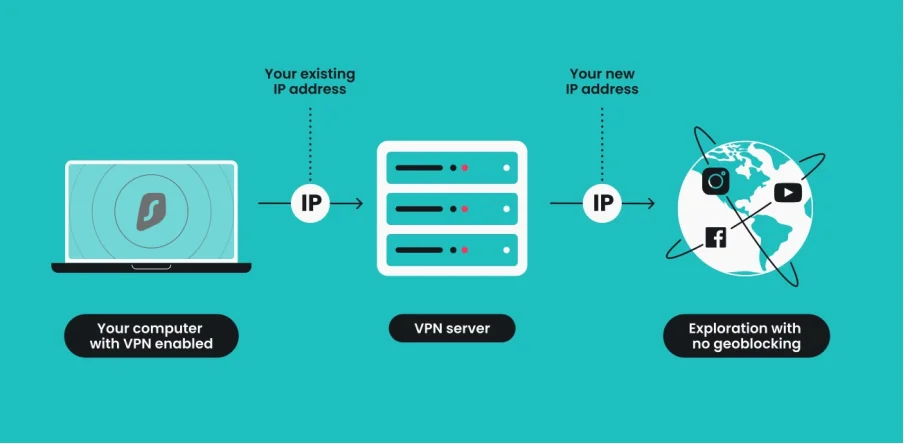
Source: VPN
While VPNs serve legitimate purposes, they make identifying and holding infringers accountable extremely difficult.
Conclusion
Copyright infringement in the digital age presents unprecedented challenges as content can be instantly copied and distributed globally. Digital copyright laws in 2025, anchored by the DMCA and fair use doctrine, provide frameworks for protecting creators’ rights while balancing public interests in accessing and using content.
Understanding what constitutes infringement from illegal downloads and streaming to plagiarism and unauthorized use helps both creators protect their works and users avoid liability. The DMCA’s anti-circumvention provisions, safe harbor protections for service providers, and takedown notice system provide enforcement mechanisms, while the fair use doctrine permits limited uses serving education, commentary, and transformation.
Online copyright protection in 2025 requires active measures including registration, technical protection like DRM and watermarking, continuous monitoring, and swift enforcement through DMCA notices and legal action when necessary. International harmonization through treaties like the Berne Convention provides baseline protections, though cross-border enforcement remains challenging.
As digital content creation and consumption continue expanding, copyright law evolves to address new technologies and distribution methods. Creators must understand their rights and protection options, while users must respect copyright boundaries and properly apply fair use principles. This balance between protection and access drives innovation while respecting creative rights in our increasingly digital world.
Frequently Asked Questions
What is considered copyright infringement in the digital age?
Do I need to register my work to get copyright protection online?
What is a DMCA takedown notice, and how does it work?
A DMCA takedown notice is a formal request sent to a website or platform asking them to remove infringing content. It must identify the copyrighted work, the infringing material, and include a sworn statement that the claim is accurate. Platforms must take down the content quickly to maintain safe harbor protection.
How can I protect my digital content from online copyright theft?
You can protect your work by registering it, using digital watermarks, DRM (Digital Rights Management), encryption, and regularly monitoring the web for copied content. If you find infringement, send a DMCA notice or a cease-and-desist letter to enforce your rights.
What counts as fair use under copyright law?