
DAVOS / LONDON (Jan. 20, 2026) — U.S. President Donald Trump sharply criticised the United Kingdom’s decision to transfer sovereignty of the Chagos Islands to Mauritius on Tuesday, branding the deal an “act of great stupidity” and a sign of “total weakness” that he said weakens Western security and justifies renewed U.S. territorial ambitions. The criticism comes as Trump has simultaneously pressed U.S. claims over Greenland, using tariff threats against European allies to advance territorial demands.
Trump’s comments, made on his Truth Social platform and in subsequent media exchanges while attending the World Economic Forum in Davos, mark an unusually direct rebuke of a major diplomatic agreement between two close U.S. allies. They have provoked reactions from British officials and raised questions about U.S. interference in another country’s sovereign decisions on international territorial arrangements.
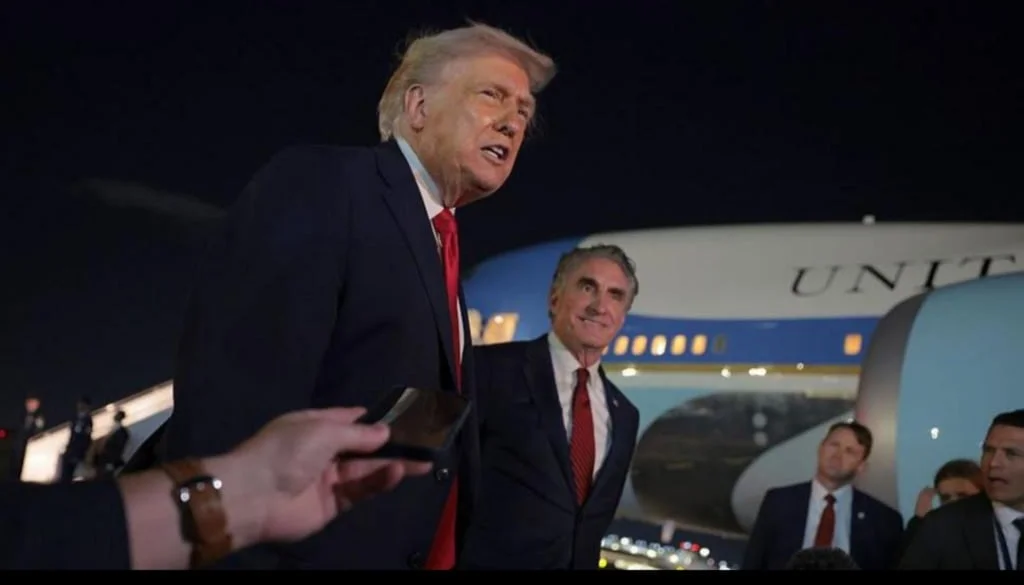
As Starmer is not expected to travel to Davos to meet Trump, his comments will only add fuel to Conservative and Reform criticisms of the move, which have cited US concerns as a reason to deny the deal with Mauritius. Darren Jones, the chief secretary to the prime minister, suggested Trump’s intervention would not affect the UK’s deal with Mauritius saying:
“We’ve done a deal with the Mauritian government, we’ve legislated for the process, we’ve agreed the terms of the treaty, which has been signed.”
Jones said Starmer was keeping calm about the criticism, as well as about the threatened tariffs on the UK over its support for Greenland, saying:
“We disagree with President Trump on Greenland, and the prime minister has been very clear about that.”
What Trump Said: ‘Great Stupidity’ and Security Risks
In a series of posts, Trump accused the UK government of ceding a strategically vital archipelago in the Indian Ocean, including the island of Diego Garcia, home to a key joint U.S.–UK military base. In a typically blunt Truth Social Trump says:
“Shockingly, our ‘brilliant’ NATO Ally, the United Kingdom, is currently planning to give away the Island of Diego Garcia, the site of a vital U.S. Military Base, to Mauritius, and to do so FOR NO REASON WHATSOEVER.”
Trump believes that this act could compromise national security and embolden rival powers such as China and Russia. Trump also linked the criticism to his controversial proposal that the U.S. should assert control over Greenland, arguing that perceived weaknesses among European allies show his rationale for expanding American strategic reach. He added:
“There is no doubt that China and Russia have noticed this act of total weakness … The UK giving away extremely important land is an act of GREAT STUPIDITY, and is another in a very long line of National Security reasons why Greenland has to be acquired.”
Those tariff threats later became the subject of intense negotiations at Davos, where Trump ultimately announced a pause following discussions with NATO partners.
Background: The Chagos Islands Deal and Its Controversy
The Chagos Islands sovereignty dispute dates back decades. The Chagos’ six main atolls, among more than 600 islands, lie 500 km (300 miles) south of the Maldives and halfway between Africa and Indonesia, with about 4,000 people stationed there.
Britain separated the archipelago from Mauritius in the 1960s to facilitate the construction of a U.S. military facility on Diego Garcia, displacing the indigenous Chagossian population in the process, but has given sovereignty to the former colony Mauritius, which it is paying 101 million pounds ($136 million) per year to secure the installation.
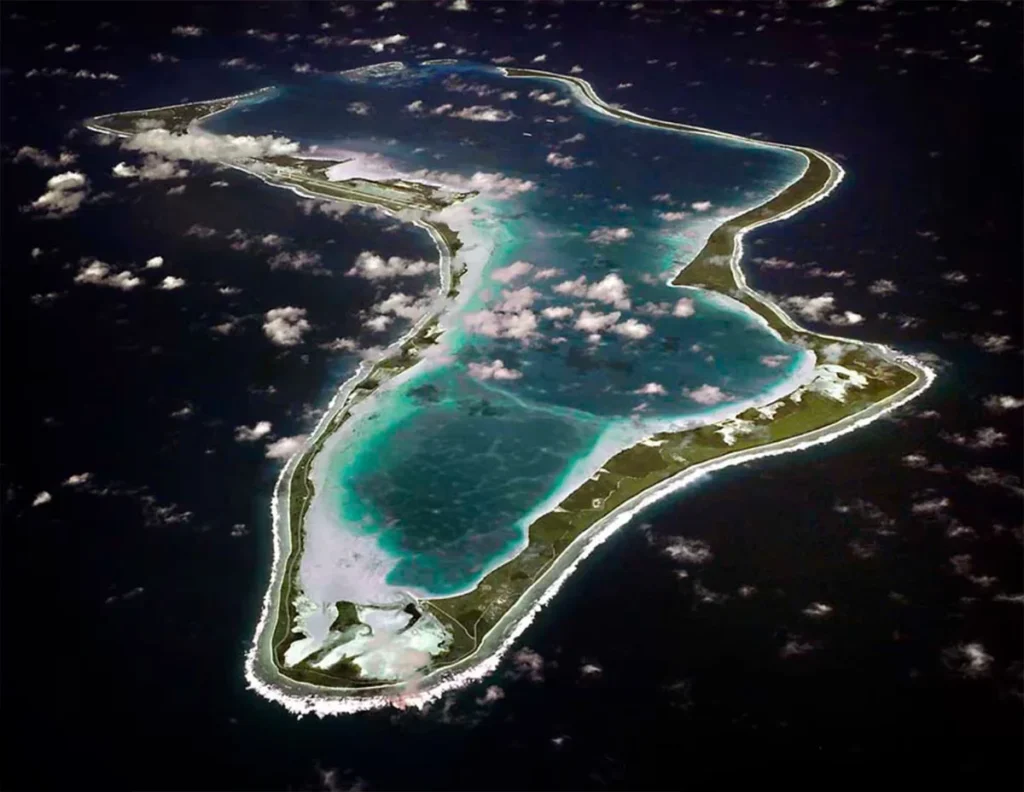
In May 2025, the UK agreed to hand sovereignty over the Chagos Islands to Mauritius, while leasing back Diego Garcia for at least 99 years to maintain joint U.S.–UK operations. The arrangement was described at the time as a resolution of long-standing legal challenges to British control and a way to secure the base’s future.
U.S. Secretary of State Marco Rubio welcomed the accord in 2025 as beneficial for the long-term operation of the military facility, reflecting prior bipartisan U.S. support.
Diplomatic Fallout: UK Response and Allied Reassurances
British officials swiftly defended the agreement amid Trump’s criticism, emphasising its legal basis and strategic value. Prime Minister Keir Starmer and Cabinet ministers have reiterated that the deal secures military cooperation and aligns with international legal advice, and that sovereignty transfer is necessary following legal rulings challenging British control of the territory.
Defending the treaty’s provisions and its 99-year leaseback arrangement, a UK government spokesperson said,
“We acted because the base on Diego Garcia was under threat after court decisions undermined our position and would have prevented it operating as intended in future.”
Broader Geopolitical Implications
Legal analysts and foreign policy experts suggest that Trump’s comments risk crossing into diplomatic interference by publicly disparaging the internal decisions of an allied government on matters of national sovereignty. They note that while allies routinely debate defence and security strategy, direct attacks on sovereign policy choices, especially after previous U.S. endorsement, can strain customary norms of non-interference.
Trump’s remarks come at a time of increasing U.S.–European tension over security priorities and territorial influence. His linkage of the Chagos Islands issue to the controversial notion of U.S. acquisition of Greenland has further unsettled transatlantic diplomatic circles, prompting calls for calm resolution and reaffirmation of alliance commitments.
European leaders, including French President Emmanuel Macron, have expressed concern over rhetoric that might be perceived as unilateral or colonial in tone, highlighting the need for a rules-based international order and respect for sovereign decision-making among allies.
Legal and Political Debate Continues
Experts also point out that a functioning military base like Diego Garcia plays a role in broader coalition operations across Asia, Africa, and the Middle East. As debates continue, the Chagos Islands handover remains a subject of legal and political contention, not least because of its colonial history and the rights of displaced Chagossians, who have long sought restitution and recognition of their forced removal.
The current diplomatic turbulence may prompt renewed discussions in international legal forums, including human rights bodies and regional security councils. From Greenland to the Chagos Islands, critics warn that the use of economic and political pressure to influence sovereignty risks eroding the legal norms that underpin alliances and the rules-based international order.
The United States and the United Kingdom have historically worked closely on defence and intelligence matters. How this episode affects broader cooperation, including NATO cohesion and strategic positioning in the Indian Ocean region, will be closely watched in the coming weeks.