
Islamabad, Pakistan — A district and sessions court in Islamabad on January 24, 2026, sentenced prominent human rights lawyer Imaan Zainab Mazari-Hazir and her husband, fellow lawyer Hadi Ali Chattha, to 17 years in prison each over social media posts that the authorities described as “anti-state” and harmful to state institutions. The convictions targeted tweets from 2021 to 2025 criticizing state institutions, military human rights abuses, and glorifying proscribed Baloch activist Mahrang Baloch.

The verdict was delivered by Additional District and Sessions Judge Muhammad Afzal Majoka, who convicted the couple under multiple provisions of the Prevention of Electronic Crimes Act (PECA) 2016. Each was handed concurrent sentences of:
“five years under Section 9, ten years under Section 10, and two years under Section 26-A of PECA, along with fines and default imprisonment provisions, totaling 17 years in prison.”
According to the written judgment, the prosecution successfully proved that the tweets and online posts made by Mazari and Chattha between 2021 and 2025 falsely portrayed Pakistan as a “terrorist state” and advanced narratives that aligned with proscribed militant groups, including the Baloch separatist insurgency and Tehreek-i-Taliban Pakistan (TTP).
Both lawyers have denied the allegations, maintaining that their posts were legitimate criticism of enforced disappearances and human rights abuses they allege were carried out by state forces, complaints the military and government have repeatedly rejected.
Exact Posts and Charges
- Glorification (PECA Section 9): Tweet on Mahrang Baloch “making a sign of victory,” urging “Join us on 7 May from 6 PM till midnight to demand justice for Dr. Mahrang Baloch & all other illegally detained BYC leaders.”
- Baloch is proscribed under Anti-Terrorism Act’s Fourth Schedule; punishable by up to 7 years.
- Hate Speech (PECA Section 10): Calling Pakistan a “terrorist state” and accusing state of human rights violations, deemed advancing proscribed groups’ objectives.
- Fake News (PECA Section 26-A): Claims of “solidarity with Mahrang Baloch that she was wrongly incarcerated” and Ghazi Amahullah’s forced disappearance, ruled likely to incite fear; up to 7 years possible.
Hadi Chattha was accused of sharing Imaan’s posts, amplifying the content. Posts focused on Balochistan/Khyber Pakhtunkhwa issues, questioning security against groups like BLA and TTP, amid the couple’s activism. Amnesty International decried it as “judicial harassment,” while bar associations condemned retaliation for free expression.
Arrest, Trial, and Procedural Concerns
Mazari and Chattha were arrested on January 23, 2026, in Islamabad while en route to a courtroom appearance. Eyewitnesses and rights groups reported that law enforcement used undue force during the arrest and provided no clear justification at the time, raising concerns about procedural fairness.
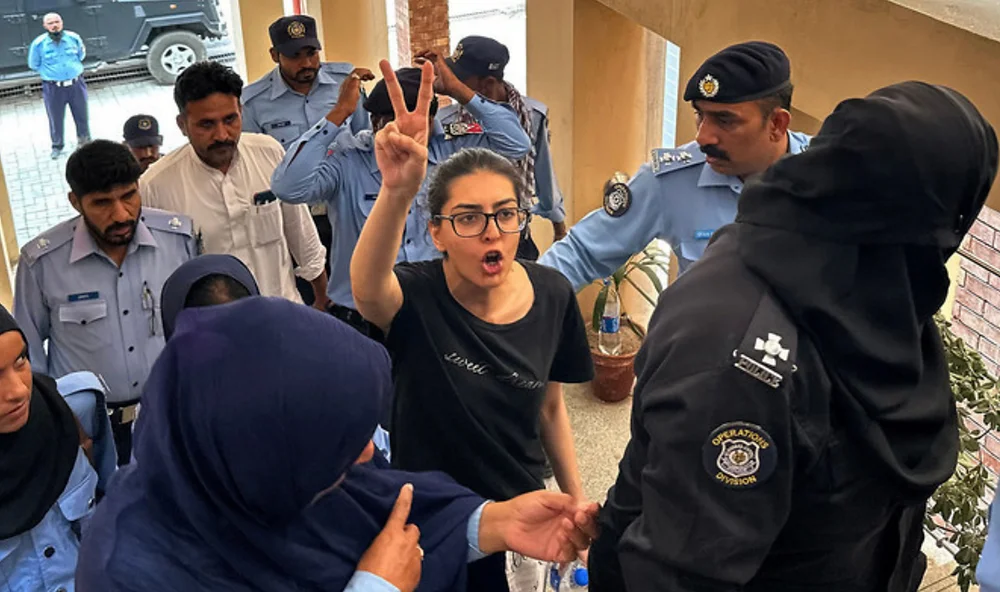
The couple boycotted parts of the court proceedings, including the final hearing, which the judge explicitly referenced in his ruling, noting that the defense had chosen not to participate. Their absence prompted criticism from legal observers who argued the trial lacked fundamental guarantees of fairness and transparency.
Domestic and International Reaction
The sentence has sparked widespread condemnation from Pakistan’s legal fraternity, human rights groups, and political figures. The Islamabad High Court Bar Association and other legal bodies staged strikes and protests, criticizing the ruling as lacking due process and alleging harassment of dissenting voices.
Civil society voices, including prominent lawyers like Jibran Nasir, accused authorities of suppressing dissent and attempting to stifle free expression, with protest actions reported in cities including Karachi, where roads leading to the Press Club were blocked by security forces to prevent demonstrations.
International rights organizations, including Amnesty International, have expressed deep concern, describing the convictions as part of a broader pattern of judicial harassment and intimidation against human rights defenders in Pakistan. Amnesty called for the immediate release of the couple and an end to the use of cybercrime laws to target critics.
The case reflects shrinking civic space and the broader chilling effect of broad cybercrime provisions on freedom of expression, as opposition parties and civil rights groups also labeled the verdict a
“grave miscarriage of justice”
Legal and Constitutional Issues at Stake
The case hinges on provisions of PECA that criminalize:
- Section 9 – glorification of proscribed organizations;
- Section 10 – dissemination of information considered to advance objectives of banned groups or malign state institutions;
- Section 26-A – intentional transmission of information believed to be false and likely to cause fear.
Critics argue these provisions are overly broad and risk criminalizing legitimate political expression and criticism of public institutions, raising serious constitutional concerns about freedom of speech and fair trial rights under Pakistani law.
Supporters of the sentence, including government officials, have defended the ruling as consistent with Pakistan’s cybercrime laws, asserting that speech alleged to promote violence, insurgency, or falsehoods about security forces falls outside protected expression.
What Comes Next
Mazari and Chattha are expected to appeal the verdict through higher courts, including the Islamabad High Court and potentially the Supreme Court of Pakistan, where constitutional challenges to PECA provisions and procedural fairness are likely to be central issues. The outcome of these appeals could have significant implications for digital speech regulation and rights advocacy in Pakistan.
The case also continues to draw international legal scrutiny, with observers noting its potential impact on Pakistan’s obligations under international human rights treaties, including those safeguarding freedom of expression and fair trial rights.
Latest Developments
The Islamabad High Court (IHC) on February 19, 2026, issued formal notices to the National Cyber Crime Investigation Agency (NCCIA) in response to appeals filed by human rights lawyer Imaan Mazari and her husband Hadi Ali Chattha challenging their conviction under Pakistan’s cybercrime laws.
The notices were issued as part of proceedings on petitions seeking suspension of their sentences and release on bail pending a final decision on their appeals. The couple has argued before the court that their conviction was the result of a “patently illegal and arbitrary trial” and violated settled legal principles and due process requirements.
The issuance of notices to the NCCIA signals that the High Court has formally taken cognizance of the appeals and will now examine whether procedural irregularities, jurisdictional errors, or constitutional violations occurred in the conviction. The outcome of the appeal is expected to become a major test case for the application of PECA provisions to political speech and digital expression in Pakistan.