
European governments have escalated accusations against the Kremlin following new forensic findings concluding that Alexei Navalny died from poisoning with a rare and highly lethal toxin while in Russian custody. Officials from France, the United Kingdom, Germany, Sweden, and the Netherlands announced that laboratory analysis identified epibatidine, a potent neurotoxin, as the likely cause of death.
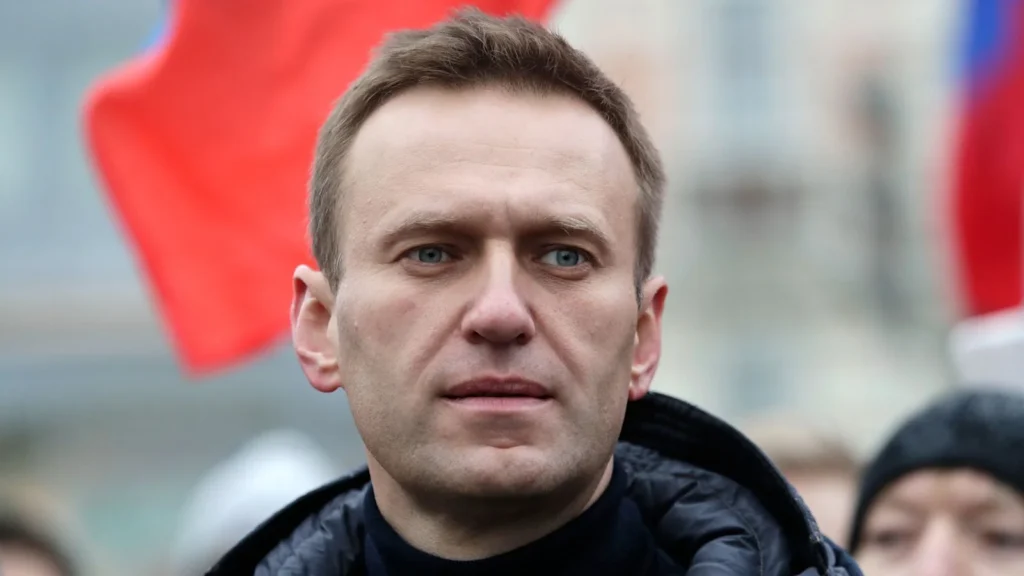
The findings, presented during the Munich Security Conference, represent the strongest scientific attribution to date and significantly strengthen Europe’s legal and diplomatic case against the Russian state. European officials stated that the toxicological evidence, combined with Navalny’s custodial detention, reinforced the conclusion that the poisoning was not accidental but deliberate, and establishes what they described as:
“means, motive, and opportunity”
Direct Accusations Against President Putin and Russian Authorities
Following the latest forensic findings linking Alexei Navalny’s death to a rare and lethal toxin, European leaders have issued some of the strongest direct accusations against Russian President Vladimir Putin and the Russian state in recent years. France’s Foreign Minister Jean-Noël Barrot publicly stated that the conclusions drawn by France and four European partners indicate that Navalny’s death was:
“deliberately orchestrated, highlighting a chilling readiness.”
The UK government went further, explicitly holding Russia responsible and describing the death as part of a broader:
“barbaric plot to silence political dissent.”
Officials stressed that the toxin identified, epibatidine, a rare neurotoxin derived from South American dart frogs, is not accessible to ordinary individuals, strongly suggesting state involvement. European diplomats emphasize that the findings reflect a systematic pattern, building on Navalny’s prior 2020 poisoning with a Novichok-class nerve agent, which was similarly attributed to Russian authorities.
These statements mark an unprecedented level of direct accusation from European governments, framing Navalny’s death as:
“more than an isolated incident, but rather a case emblematic of state-backed repression and extrajudicial targeting.”
Legal experts note that while these accusations carry significant political weight, translating them into enforceable international accountability remains a complex challenge, as Russia maintains sovereign control over its territory, evidence, and cooperation with investigative mechanisms. The case therefore shows the tension between scientific and legal attribution of responsibility and the practical limitations of international enforcement against major powers.
Referral to Chemical Weapons Watchdog Raises Treaty Compliance Questions
In response to the latest forensic findings linking Alexei Navalny’s death to the rare neurotoxin epibatidine, European governments have formally referred the case to the Organisation for the Prohibition of Chemical Weapons. This referral raises critical legal and treaty compliance questions under the Chemical Weapons Convention (CWC), to which Russia is a signatory.
The OPCW, responsible for monitoring adherence to the CWC and investigating potential use of toxic chemical agents, is now expected to assess whether the toxin involved falls within the treaty’s prohibited substances list and whether Russia maintained control over such agents contrary to its obligations.
According to European authorities, the identification of epibatidine, a highly potent substance derived from the skin of South American poison dart frogs, suggests state-level access and expertise, strengthening claims of potential violation of international chemical weapons norms. Legal analysts emphasize that the OPCW’s involvement has both scientific and political significance.
While the organization can confirm the presence of prohibited substances, recommend compliance measures, and issue findings, it cannot directly enforce criminal accountability against a sovereign state without broader international consensus or UN Security Council action. Nevertheless, the referral sets a precedent in leveraging forensic science to hold states to international chemical weapons standards, highlighting the growing intersection of toxicology, international law, and human rights in addressing extrajudicial killings.
Russia Denies Allegations as Legal and Enforcement Limits Emerge
Russia has consistently rejected allegations that Alexei Navalny was poisoned while in custody, maintaining that he died of natural causes during his detention in an Arctic penal colony. Kremlin officials have dismissed European claims as politically motivated, framing the reports as part of a broader anti-Russian narrative. This public denial underscores a core limitation of international legal mechanisms: the reliance on state cooperation for investigation, evidence access, and enforcement.
Despite strong forensic evidence from European laboratories pointing to the use of a rare neurotoxin, Russia’s refusal to allow independent inspections, produce custodial records, or provide access to key witnesses has effectively blocked international judicial or chemical weapons investigations.
Legal analysts also highlight the geopolitical dimension that, as a permanent member of the United Nations Security Council, Russia can veto any proposed enforcement or sanctions measures, limiting the capacity of the international community to compel accountability.
Alexei Navalny’s 2024 death cannot be viewed in isolation, as it follows a history of targeted attacks and political persecution. In August 2020, Navalny survived a poisoning with a Soviet-era nerve agent from the Novichok family, an incident that drew widespread international condemnation and was widely attributed to Russian state operatives.
He was subsequently treated in Germany, where forensic analysis confirmed exposure to the banned nerve agent. This event underscored the risks faced by prominent opposition figures in Russia and highlighted systemic threats to political dissent under the current administration. After recovering abroad, Navalny returned to Russia in 2021, fully aware of the dangers he faced, and was immediately arrested upon arrival.
He was later sentenced to 19 years in prison on charges widely criticized by international observers as politically motivated. Despite incarceration, Navalny remained a prominent symbol of opposition, continuing to speak out against corruption and the Russian government’s domestic and international policies.
His anti-corruption campaigns had previously mobilized tens of thousands of supporters, though mass protests have since become rare due to strict domestic crackdown and legal repression. Even while imprisoned, Navalny remained a central symbol of political opposition and anti-corruption activism.
Legal and Geopolitical Implications Intensify International Scrutiny
The confirmation that Alexei Navalny was likely poisoned with a rare neurotoxin has significantly intensified both legal and geopolitical scrutiny of Russia. The referral of the case to the Organisation for the Prohibition of Chemical Weapons raises critical questions under the Chemical Weapons Convention about Russia’s obligations, its handling of controlled toxins, and compliance with international chemical weapons law.
At the same time, these developments have strengthened coordinated diplomatic efforts, including potential sanctions, targeted restrictions, and political pressure aimed at holding Russia accountable. Experts note that while international courts cannot directly compel Russia to cooperate, the combination of forensic evidence, treaty obligations, and diplomatic leverage provides a multi-faceted approach to addressing violations.
Geopolitically, Navalny’s death and the scientific confirmation of poisoning have escalated tensions between Russia and Europe, highlighting the intersection of human rights law, chemical weapons regulation, and international security norms.