
The legality of the recent U.S. military strikes on Iran has become one of the most contested legal questions in global politics, raising complex issues under both international law and U.S. domestic constitutional law. Under the United Nations Charter, the use of force against another sovereign state is generally prohibited unless it is authorized by the UN Security Council or justified as self-defense against an actual or imminent armed attack.
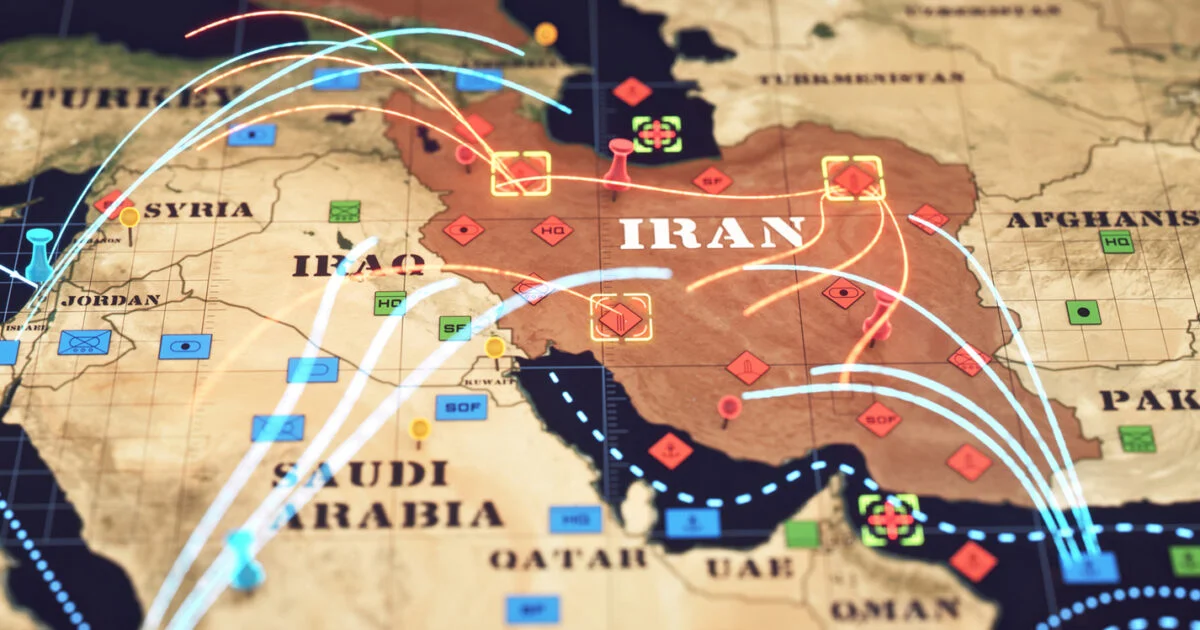
At the same time, within the United States, presidential military action must comply with constitutional limits and the War Powers Resolution of 1973, which requires the president to notify Congress and obtain authorization for prolonged hostilities. The controversy intensified after contradictory statements by U.S. officials regarding the objectives and duration of the war, raising concerns among lawmakers and legal scholars about the operation’s legitimacy.
As the conflict with Iran intensifies, governments, legal scholars, and lawmakers are increasingly debating whether the strikes meet these legal thresholds or whether they risk undermining both the international prohibition on unilateral use of force and the constitutional balance of war-making powers between Congress and the president.
International Law: The UN Charter and the Use of Force
The legality of military strikes between states is primarily governed by the United Nations Charter, which establishes the foundational rules of modern international law regarding the use of force. Adopted in 1945 after the devastation of World War II, the UN Charter was designed to prevent unilateral military aggression and maintain international peace and security. As a result, the Charter introduced a general prohibition on the use of force between sovereign states, significantly restricting when countries may lawfully resort to military action.
Article 2(4): The Prohibition on the Use of Force
The central rule governing interstate military action appears in Article 2(4) of the UN Charter, which requires all member states to refrain from the threat or use of force against the territorial integrity or political independence of any state. This provision forms the cornerstone of the modern international legal order and reflects the principle that disputes between states should be resolved through diplomatic and peaceful means rather than armed conflict.
Under this rule, military attacks against another state are generally considered unlawful unless they fall within recognized legal exceptions. The prohibition applies regardless of whether the attack involves conventional forces, missile strikes, drone warfare, or cyber operations that produce physical destruction.
Self-Defense and the “Imminent Threat” Requirement
The most important exception to the prohibition on the use of force is the right of self-defense, recognized in Article 51 of the UN Charter. This provision allows states to use military force if they are responding to an armed attack or an imminent threat of such an attack. However, the right of self-defense is not unlimited. International law requires that any defensive action satisfy two key conditions:
- Necessity, meaning force must be required to repel or prevent the attack and that no peaceful alternatives are available.
- Proportionality, meaning the scale and scope of the military response must be limited to what is necessary to neutralize the threat.
In practice, the concept of imminent attack has become one of the most debated issues in international law. Some governments argue that preventive strikes may be lawful if intelligence shows an enemy is preparing an attack, while many legal scholars maintain that self-defense requires evidence of a truly immediate threat.
In the case of the U.S.–Iran conflict, Washington has reportedly justified military action on grounds such as:
- Preventing Iranian attacks on U.S. forces and allies
- Neutralizing Iran’s missile and naval capabilities
- Preventing potential nuclear weapon development
The key legal question is whether these actions meet the criteria of necessity and proportionality, two fundamental principles of lawful self-defense. If strikes are aimed at preventing a speculative or distant threat rather than responding to an imminent attack, critics argue they could violate the UN Charter.
The most critical legal issues in assessing the legality of U.S. strikes on Iran concern the interpretation of self-defense under international law, particularly the requirement that a threat be imminent. Article 51 of the United Nations Charter recognizes the inherent right of states to defend themselves when an armed attack occurs, but international legal doctrine has evolved to encompass situations in which an attack is not yet underway but is clearly imminent.
The concept of imminence originates from the Caroline incident of 1837, which established a widely cited legal standard in customary international law. According to the Caroline formulation, anticipatory self-defense is permissible only when the necessity for force is
“instant, overwhelming, leaving no choice of means and no moment for deliberation.”
This standard requires that the threat be immediate and unavoidable, meaning that delaying action would expose the state to imminent harm.
Modern international law continues to rely on this framework. For a state to lawfully invoke anticipatory self-defense, it must demonstrate credible evidence that an armed attack is about to occur and that the use of force is necessary to prevent it. The responding state must also ensure that its actions are proportionate, meaning the scale and intensity of the response must be limited to neutralizing the threat.
In the context of contemporary conflicts, however, governments have increasingly adopted broader interpretations of imminence. Some states argue that threats posed by ballistic missile programs, nuclear weapons development, or support for armed proxy groups may justify preventive strikes before an attack becomes immediate. Critics of this approach contend that expanding the concept of imminence risks undermining the prohibition on the use of force, effectively allowing states to justify military action based on speculative or long-term threats.
The debate is particularly relevant to the legality of recent U.S. strikes on Iran. Supporters of the operation argue that the strikes were necessary to prevent imminent attacks against U.S. forces or allies in the region. Opponents, however, argue that unless clear evidence of an immediate armed attack exists, the strikes could fall outside the lawful scope of self-defense under the UN Charter.
Ultimately, the legal assessment of the operation depends on whether the United States can demonstrate that the threat it sought to neutralize met the strict international legal threshold of imminence. Without such evidence, critics argue that the strikes risk being interpreted as preventive rather than defensive, raising serious questions about their compatibility with the international legal framework governing the use of force.
Pre-Emptive vs Preventive War Debate
Modern conflicts increasingly involve claims of pre-emptive or preventive self-defense, where a state attacks before an enemy launches a strike. While some governments argue that emerging threats, such as missile programs or nuclear development, justify early action, the legality of preventive force remains highly controversial.
Many international law scholars argue that allowing states to attack based on speculative future threats would undermine the UN Charter system and weaken the global prohibition on the use of force. A central legal controversy in the current crisis is whether the United States is engaging in anticipatory self-defense. International law distinguishes between:
- Anticipatory Self-Defense – Force used to stop an imminent attack that is about to occur.
- Preventive War – Force used to eliminate a possible future threat.
Most legal scholars accept anticipatory self-defense in limited circumstances but reject preventive war as unlawful. If the U.S. strikes are interpreted as preventive rather than anticipatory, they may face serious challenges under international law.
A central legal controversy in modern international law concerns the distinction between pre-emptive war and preventive war, particularly when states justify military action as a form of self-defense. This debate is crucial when evaluating the legality of military strikes under the UN Charter, because international law permits certain forms of anticipatory self-defense but strongly restricts wars based on speculative or long-term threats.
Pre-Emptive War: Responding to an Imminent Attack
Pre-emptive war refers to the use of force in anticipation of an imminent armed attack. In this scenario, a state launches a strike because credible evidence shows that an enemy attack is about to occur and delaying action would significantly increase the risk of harm. The legal justification for pre-emption is rooted in the concept of anticipatory self-defense, which is widely debated but recognized by many states as permissible when the threat is immediate and unavoidable.
Under international law, a pre-emptive strike must satisfy strict legal conditions:
- Imminence: The enemy attack must be clearly impending.
- Necessity: No peaceful alternatives can neutralize the threat.
- Proportionality: The force used must be limited to preventing the attack.
When these requirements are met, many legal scholars argue that pre-emptive self-defense can fall within the scope of Article 51 of the UN Charter, even though the Charter refers specifically to situations where an armed attack “occurs.”
Preventive War: Acting Against a Future Threat
Preventive war, by contrast, involves military action taken to stop a potential threat that may arise in the future, rather than an attack that is about to occur. Preventive strikes are typically justified by concerns about an adversary’s growing military power, weapons development, or long-term strategic ambitions.
Unlike pre-emptive action, preventive war does not involve an imminent threat. Instead, it seeks to eliminate a future danger before it fully materializes. Most international law scholars view preventive war as incompatible with the UN Charter, because it expands the concept of self-defense beyond the narrow limits intended to prevent unilateral aggression.
Allowing preventive war as a legal justification could create a system where states justify military action based on perceived future risks, undermining the prohibition on the use of force.
Historical Examples of the Debate
The distinction between pre-emptive and preventive war has appeared in several major conflicts. For example, Israel’s 1967 Six-Day War is often cited as a case of pre-emptive self-defense, where Israeli forces launched strikes after concluding that an Arab attack was imminent. By contrast, the 2003 U.S. invasion of Iraq is widely described by legal scholars as a preventive war because it was justified largely on the basis of suspected future threats rather than an immediate attack.
These examples illustrate how difficult it can be to determine whether a military action falls within lawful anticipatory self-defense or constitutes unlawful preventive war.
Relevance to the U.S.–Iran Conflict
The distinction between pre-emption and prevention is central to assessing the legality of recent U.S. strikes on Iran. If the United States can demonstrate that Iran posed an imminent threat of armed attack, the strikes may be defended as lawful pre-emptive self-defense under Article 51 of the UN Charter.
However, if the strikes were intended primarily to stop Iran from developing future capabilities or to weaken its strategic position, critics argue they could be interpreted as preventive warfare, which most interpretations of international law consider unlawful.
As geopolitical tensions escalate, the pre-emptive versus preventive war debate continues to shape international legal discussions about the limits of state self-defense and the broader effort to maintain the global prohibition on the unilateral use of force.
International Humanitarian Law (Laws of War)
Even when the use of force between states may be considered lawful under the UN Charter, the conduct of hostilities is still strictly governed by International Humanitarian Law (IHL), commonly known as the laws of war. These rules regulate how wars are fought and aim to minimize human suffering by protecting civilians, prisoners of war, and other non-combatants. International humanitarian law applies to all parties in an armed conflict, regardless of which side initiated the war or whether the conflict itself is legally justified.
The primary sources of IHL include the Geneva Conventions of 1949, their Additional Protocols, and a large body of customary international law developed through state practice and international tribunals. These rules impose obligations on military forces to limit the methods and means of warfare and to ensure that military operations respect fundamental humanitarian principles.
Principle of Distinction
The most fundamental rule of international humanitarian law is the principle of distinction, which requires parties to a conflict to distinguish at all times between combatants and civilians, as well as between military objectives and civilian objects. Military attacks may only be directed against legitimate military targets such as armed forces, weapons systems, and military installations.
Civilian objects, including homes, hospitals, schools, and cultural sites—are protected unless they are being used for military purposes. Intentionally targeting civilians or civilian infrastructure is considered one of the most serious violations of international humanitarian law and can constitute a war crime under international criminal law.
Principle of Proportionality
Another critical rule is the principle of proportionality, which prohibits attacks expected to cause incidental civilian harm that would be excessive in relation to the anticipated military advantage. Even when a legitimate military target exists, commanders must carefully assess whether the expected civilian casualties or damage to civilian infrastructure would outweigh the military benefit of the attack.
This principle recognizes that some civilian harm may occur during military operations but requires that such harm be minimized and not disproportionate.
Precautions in Attack
International humanitarian law also requires armed forces to take all feasible precautions to avoid or minimize harm to civilians. This obligation includes verifying targets, choosing weapons that reduce civilian risk, and canceling or suspending an attack if it becomes clear that the target is not a legitimate military objective or that civilian casualties would be excessive.
Modern military planning therefore involves extensive intelligence verification, surveillance, and legal review processes designed to ensure compliance with these rules.
Protection of Certain Civilian Facilities
Certain locations receive special protection under international humanitarian law, including hospitals, medical units, humanitarian relief operations, and educational institutions. Attacks on these sites are prohibited unless they are being used to carry out military operations.
In recent conflicts, incidents involving the destruction of hospitals, schools, and refugee shelters have generated intense international scrutiny because such attacks may constitute grave breaches of the Geneva Conventions.
War Crimes and Accountability
Serious violations of international humanitarian law can constitute war crimes, which may lead to criminal responsibility for individuals involved in planning or executing unlawful attacks. War crimes include intentionally targeting civilians, launching disproportionate attacks, mistreating prisoners of war, and using prohibited weapons.
Accountability for such crimes may occur through domestic military courts, national criminal prosecutions, or international tribunals, including the International Criminal Court (ICC). Under the doctrine of command responsibility, military and political leaders may also be held liable if they knew or should have known about violations committed by their subordinates and failed to prevent them.
Relevance to the U.S.–Iran Conflict
In the context of the ongoing conflict involving the United States, Israel, and Iran, international humanitarian law plays a critical role in evaluating the legality of specific military operations. Even if a state claims that its use of force is justified as self-defense, the methods used in conducting military operations must still comply with the laws of war.
Incidents involving civilian casualties, attacks on protected infrastructure, or allegations of disproportionate force are therefore likely to be examined through the framework of international humanitarian law. These legal standards provide an essential mechanism for assessing whether military actions during the conflict respect the humanitarian limits established by the international community.
U.S. Domestic Law: The War Powers Resolution
Beyond international law, the legality of the war also depends on U.S. constitutional rules governing military authority. The War Powers Resolution of 1973 was enacted after the Vietnam War to limit unilateral presidential military action. Under this law:
- The president can deploy military forces without congressional authorization only in emergencies.
- The administration must notify Congress within 48 hours of initiating hostilities.
- Military operations must end within 60 days unless Congress authorizes continued involvement.
This law was enacted by the U.S. Congress in response to concerns that presidents had increasingly engaged the United States in military conflicts without formal declarations of war. The War Powers Resolution seeks to restore the constitutional balance between the executive and legislative branches by limiting the president’s unilateral authority to initiate prolonged military hostilities.
Constitutional Background
Under the U.S. Constitution, the authority to declare war belongs to Congress, while the president serves as commander-in-chief of the armed forces. This division of powers was intended to ensure that decisions involving major military conflict would involve democratic oversight through the legislative branch.
However, throughout the twentieth century, presidents frequently ordered military operations without formal declarations of war. Conflicts such as the Vietnam War intensified concerns that the executive branch was bypassing Congress in matters of war-making authority. As a result, Congress passed the War Powers Resolution to create clearer legal procedures governing military deployments.
Key Requirements of the War Powers Resolution
The War Powers Resolution establishes several important obligations for the president when U.S. forces are introduced into hostilities or situations where hostilities are imminent.
First, the president must notify Congress within 48 hours of deploying U.S. armed forces into combat or situations that could lead to hostilities. This notification must explain the circumstances necessitating the deployment, the legal basis for the action, and the anticipated scope and duration of the military operation.
Second, the law establishes a 60-day limit on military operations conducted without explicit congressional authorization. If Congress does not approve the use of force within that period, the president is required to withdraw U.S. forces within an additional 30-day withdrawal period.
Third, Congress retains the authority to terminate military operations earlier through legislative action, thereby asserting its constitutional authority over decisions involving war.
Presidential Authority and Legal Controversies
Despite these statutory limits, the War Powers Resolution has been a source of ongoing legal and political controversy. Many presidents from both major political parties have argued that the law unconstitutionally restricts the commander-in-chief’s authority to conduct military operations necessary to protect national security interests.
As a result, presidents often comply with the reporting requirements of the law but avoid explicitly acknowledging that their actions are legally governed by it. Instead, they frequently describe notifications to Congress as being submitted
“consistent with the War Powers Resolution rather than pursuant to it.”
This longstanding tension reflects a broader debate about the extent of presidential power in matters of foreign policy and military action.
Application to U.S. Strikes on Iran
In the context of recent U.S. strikes on Iran, the War Powers Resolution has become a focal point of debate in Washington. Members of Congress have questioned whether the president had sufficient legal authority to launch military operations without prior congressional approval.
If the strikes represent a limited defensive action designed to protect U.S. forces or prevent imminent threats, the president may argue that such operations fall within the scope of the commander-in-chief’s constitutional authority. However, if the military campaign expands into sustained hostilities, Congress may assert that formal authorization, such as an Authorization for Use of Military Force (AUMF), is required.
Failure to obtain congressional approval within the timeframe established by the War Powers Resolution could trigger legal and political challenges, including legislative efforts to restrict funding for the military operation.
The Broader Constitutional Debate
The debate surrounding the War Powers Resolution illustrates a fundamental constitutional question in the United States: who ultimately decides when the nation goes to war. While the president possesses significant authority to respond quickly to threats, the Constitution grants Congress a central role in authorizing sustained military conflict.
As tensions between the United States and Iran escalate, the application of the War Powers Resolution highlights the continuing struggle to balance executive flexibility in national security decisions with democratic oversight and constitutional accountability.
Congressional Authority and Political Debate
The legality of U.S. military strikes on Iran has also intensified the long-standing debate over Congressional authority in matters of war and military intervention. Under the U.S. Constitution, Article I grants Congress the power to declare war, raise and support armies, regulate the armed forces, and control military funding. These powers were designed to ensure that decisions involving large-scale military conflict would not be made unilaterally by the executive branch but would instead involve democratic oversight through the legislative process.
In practice, however, modern U.S. presidents have frequently relied on their constitutional authority as Commander-in-Chief under Article II to order limited military operations without a formal declaration of war. Presidents from both political parties have justified such actions as necessary to respond quickly to emerging threats, protect U.S. personnel abroad, or defend national interests.
As a result, the boundary between executive military authority and congressional war-making power has become one of the most contested issues in U.S. constitutional law. The recent strikes on Iran have reignited this debate within Congress. Several lawmakers have argued that launching military operations against a sovereign state without prior congressional approval risks bypassing the constitutional requirement that:
“Congress authorize major acts of war.”
Critics contend that allowing presidents to initiate large-scale military action without legislative authorization undermines the constitutional separation of powers and weakens democratic accountability in decisions involving armed conflict. Supporters of the administration’s actions, however, argue that the president retains the authority to conduct limited defensive military operations under the commander-in-chief power, particularly when U.S. forces or allies face immediate threats.
They contend that requiring congressional approval before every military response could limit the government’s ability to react swiftly in rapidly evolving security situations. Political debate has therefore centered on whether the strikes against Iran constitute a limited defensive action or represent the beginning of a broader military campaign that would require explicit authorization from Congress.
Some members of Congress have proposed resolutions invoking the War Powers Resolution to compel a vote on whether U.S. forces should remain engaged in hostilities with Iran. At the same time, Congress retains a powerful tool for influencing military policy through its control over federal spending. Lawmakers can restrict or condition military funding, potentially forcing the executive branch to scale back or terminate military operations if legislative approval is not granted.
The dispute reflects a broader constitutional struggle that has persisted for decades: balancing the need for swift executive decision-making in national security matters with the constitutional principle that decisions about war should ultimately reflect the will of the people through their elected representatives in Congress. As tensions with Iran continue to evolve, the political and legal debate over congressional authority is likely to remain a central issue in determining the scope and duration of U.S. military involvement.
Strategic Legal Risks for the United States
The ongoing military confrontation with Iran presents significant strategic legal risks for the United States, both in terms of international law and domestic constitutional governance. Even when military operations are justified as defensive or necessary for national security, they can create long-term legal consequences that affect diplomatic relations, international legitimacy, and domestic political stability.
One of the most immediate risks arises from potential allegations of unlawful use of force under international law. If the strikes cannot be convincingly justified as self-defense under Article 51 of the UN Charter or authorized by the UN Security Council, critics may argue that the United States has violated the fundamental prohibition on the use of force. Such accusations could weaken the credibility of the U.S. position in defending the rules-based international order and could encourage other states to justify similar unilateral military actions.
Another significant legal concern relates to international humanitarian law and civilian protection. Military operations that result in substantial civilian casualties or damage to protected infrastructure may trigger investigations under the laws of armed conflict. Even if the United States argues that strikes targeted legitimate military objectives, allegations of disproportionate force or insufficient precautions could:
“expose the country to diplomatic pressure, international investigations, or demands for accountability and compensation.”
The conflict also carries domestic legal risks within the United States. If military operations expand beyond short-term defensive strikes, Congress may assert that the administration must obtain formal authorization under the War Powers Resolution or pass a new Authorization for Use of Military Force (AUMF). Failure to secure such authorization could intensify political disputes over executive authority and potentially lead to legislative attempts to restrict funding for military operations.
Beyond legal disputes, there are also broader strategic implications for global alliances and diplomatic relationships. Allies may be reluctant to support or participate in military operations if they believe the legal justification is uncertain or inconsistent with international law. This could complicate coalition-building efforts and reduce international cooperation in managing regional security challenges.
Finally, repeated reliance on expansive interpretations of self-defense may contribute to a gradual erosion of international norms governing the use of force. If major powers increasingly justify preventive or unilateral military actions without clear legal authorization, the broader framework designed to prevent interstate war could become less effective. For the United States, which has historically promoted a rules-based international system, such developments may carry long-term diplomatic and legal consequences.
In this context, the legal justification for military operations against Iran is not only a matter of technical legal interpretation but also a strategic issue that shapes the credibility of U.S. leadership, the stability of international legal norms, and the balance of constitutional powers at home.
Conclusion
The question of whether U.S. strikes on Iran can be lawful ultimately depends on a complex interaction between international law governing the use of force and domestic constitutional limits on presidential war-making powers. Under the UN Charter, military action against another state is generally prohibited unless it is justified as self-defense against an actual or imminent armed attack or authorized by the UN Security Council. At the same time, U.S. domestic law requires that sustained military operations comply with the War Powers Resolution and the constitutional balance of authority between Congress and the president.
In evaluating the legality of the strikes, two central issues emerge. First, whether the United States can demonstrate that Iran posed an imminent threat that justified anticipatory self-defense under international law. Second, whether the scope and duration of the military operations remain within the president’s constitutional authority or require explicit congressional authorization.
Beyond these technical legal questions, the situation also highlights broader implications for the rules-based international order and democratic oversight of military power. Expansive interpretations of self-defense or unilateral executive military action risk weakening the legal frameworks designed to limit armed conflict and ensure accountability in decisions involving war.
As the conflict evolves, legal scrutiny from international institutions, allied governments, and the U.S. Congress will likely continue. Ultimately, the legality of the strikes will not only shape the trajectory of the U.S.–Iran confrontation but may also influence how international law and constitutional war powers are interpreted in future global crises.
Frequently Asked Questions
Are U.S. strikes on Iran automatically illegal under international law?
No. Under the United Nations Charter, the use of force against another state is generally prohibited. However, there are two recognized exceptions: self-defense under Article 51 and authorization by the UN Security Council. If the United States can demonstrate that the strikes were necessary to repel or prevent an imminent armed attack, it may argue that the actions fall within the lawful right of self-defense. Without such justification, critics may argue that the strikes violate international law.
What does “imminent threat” mean in international law?
An imminent threat refers to a situation where an armed attack is about to occur and there is no reasonable opportunity to prevent it through peaceful means. International legal doctrine, often traced to the Caroline standard, requires that the threat be immediate, overwhelming, and leaving no choice of alternatives. This requirement ensures that states cannot justify military action based on speculative or distant future threats.
What is the difference between pre-emptive and preventive war?
A pre-emptive strike occurs when a state uses force to stop an enemy attack that is about to happen. This form of anticipatory self-defense may be considered lawful if the threat is truly imminent. In contrast, preventive war involves attacking a state to stop a potential future threat before it becomes immediate. Preventive wars are generally considered inconsistent with international law because they undermine the UN Charter’s prohibition on the use of force.
What role does international humanitarian law play in the conflict?
Even if military action is legally justified as self-defense, the laws of war (international humanitarian law) regulate how military operations are conducted. These rules require armed forces to distinguish between civilians and combatants, avoid disproportionate attacks that cause excessive civilian harm, and take precautions to minimize civilian casualties. Violations of these rules may constitute war crimes.
Does the U.S. president have the authority to launch strikes without Congress?
The president has constitutional authority as commander-in-chief to conduct limited military operations, particularly in emergency situations or to protect U.S. forces. However, the U.S. Constitution grants Congress the power to declare war, and sustained military conflict typically requires congressional authorization.
What is the War Powers Resolution, and how does it apply?
The War Powers Resolution of 1973 requires the president to notify Congress within 48 hours of introducing U.S. forces into hostilities. If Congress does not authorize the action within 60 days, the president must withdraw U.S. forces within an additional 30-day period. This law was designed to ensure congressional oversight over military engagements.
Could international courts investigate the strikes?
In theory, allegations of violations of international humanitarian law could be examined by international investigative bodies or tribunals. However, jurisdictional issues and political considerations often make such proceedings complex, particularly when major powers are involved.
Why does the legal debate matter for global politics?
The legal interpretation of the strikes has broader implications for the international rules governing the use of force. If states expand the concept of self-defense too broadly, it could weaken the global prohibition on unilateral military action and encourage other countries to justify similar interventions.
What could determine whether the strikes are ultimately considered lawful?
The legality of the strikes will largely depend on evidence about the threat that the United States claims to have prevented, whether the military response was necessary and proportionate, and whether the operations comply with both international humanitarian law and U.S. domestic legal requirements.