
The global weather disasters made the first half of 2025 the costliest period in history, with record-breaking damages caused by storms, floods, and heatwaves across the globe.
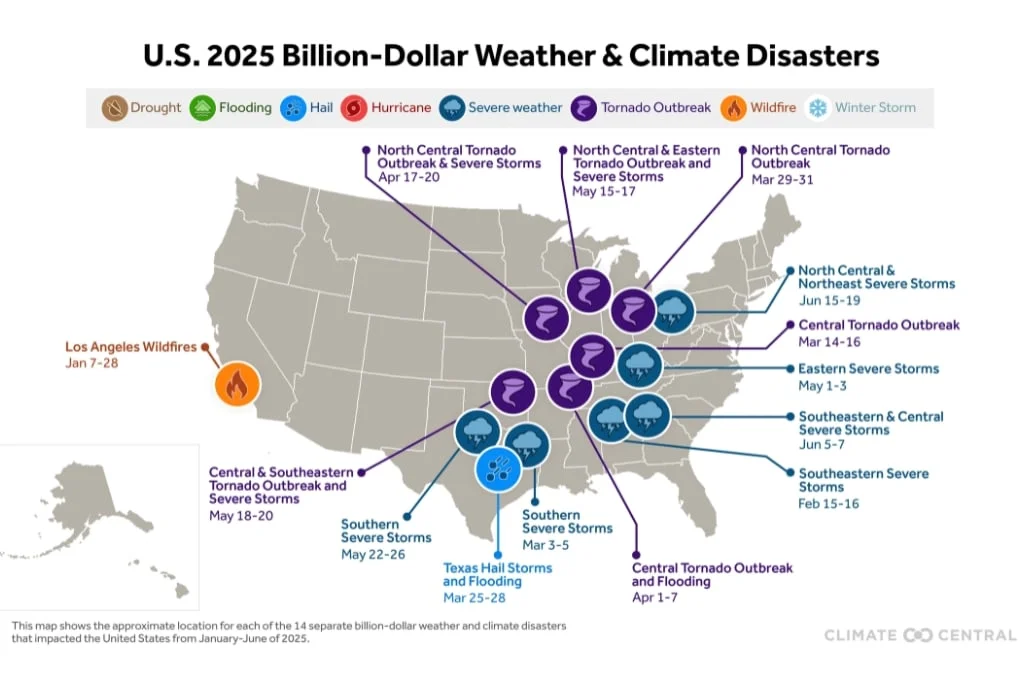
Source: earth.org
The first half of 2025 has been confirmed as the costliest period ever recorded for U.S. weather and climate-related disasters, thanks to an effort by nonprofit Climate Central to revive data tracking discontinued by the Trump administration. This critical information might never have reached the public if not for their intervention.
NOAA Program Cut Under Trump Administration
In the past it was it was the National Oceanic and Atmospheric Administration (NOAA) had an initiative that tracked weather events that cause at least $1 billion worth of damages across the nation.
In spring 2025 the program was shut down, which led the researcher in charge, Adam Smith, to quit NOAA. Climate Central then hired Smith to revamp the database keeping records going up to the year 1980.
Record-Breaking Damage Costs and Extreme Weather
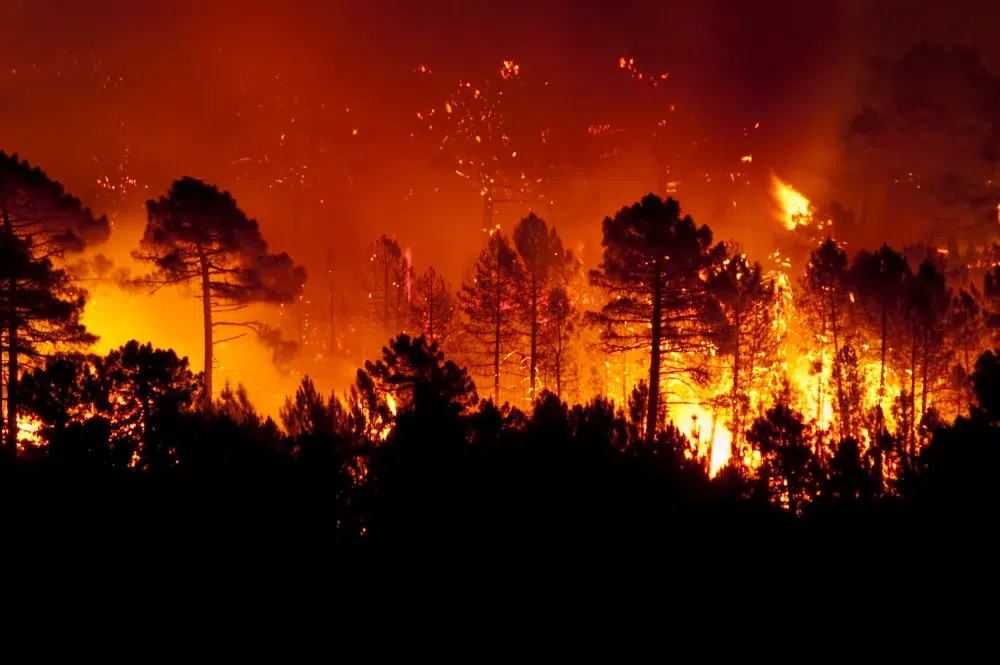
In the latest Climate Central analysis, 14 weather events have surpassed the threshold of $1 billion in damage in one of the first six months. In January, the wildfires that erupted and ravaged Los Angeles alone generated more than $61 billion in losses, making it the most expensive wildfire ever recorded.
The rising costs are a reflection of not just the increase in intensity and frequency of extreme weather events, but also the increased population who live in areas at risk to flooding and wildfires.
Filling the Data Void Left by Federal Cuts
This development shows how nonprofit organizations are increasingly taking on the functions previously assigned to federal programs. The Trump administration’s cut in funding for climate science and the rejection of the concept that climate change is a “con job” led to significant cuts in funding and also attempts to weaken the Environmental Protection Agency’s powers to regulate greenhouse gas pollution that is fueling global warming.
Jennifer Brady, a senior data analyst at Climate Central, emphasized the information’s significance:
“It tells the climate change story. It is a story about where people live and what they’re doing to stay safe. We’re thrilled to see it come back.”
NOAA expressed its appreciation for the research project was able to find alternatives to funding, but said it will redirect funds towards projects that are in line with the administration’s emphasis on:
“sound, unbiased research”
Political Controversies and Efforts to Restore Tracking
The database of disasters worth billions of dollars became controversial politically. House Republicans have complained to NOAA of providing “deceptive data,” leading to the cancellation of the program.
Senate Democrats have introduced legislation to reinstate and require biannual updates of the dataset to inform disaster relief decisions, but the bill remains stalled in the Republican-controlled Senate.
Trump administration officials asserted that the database was cost-effective at approximately $300,000 per year in addition to being “purely informational,” claiming that it overstated the link between the effects of climate change on disasters and did not take into account other factors like populations growth in areas of vulnerability.
Methodology and Scope of Climate Central’s Analysis
Climate Central follows the same methodology and data sources that are used by NOAA as well as data sources such as National Flood Insurance Program claims, NOAA storm data, and private insurance records.
Their analysis considers “direct costs” such as damage to crops, infrastructure and buildings, which are adjusted to reflect inflation. However, it doesn’t include indirect effects like health impacts and loss of life or damages to ecosystems.
Rising Disaster Costs Without Hurricanes
The record-breaking costs for 2025 were primarily driven by extreme storms and wildfires, and there have been no major hurricanes to strike up to now.

In the year 2000, NOAA recorded 27 billion-dollar catastrophes, resulting in $182.7 billion in damage making it some of the more destructive years in history.
Federal Climate Science Programs Challenged and Replaced
Beyond tracking disasters, the other federal climate science resources have also suffered setbacks. The laid-off NOAA employees launch climate.us which is a non-profit successor to climate.gov with the goal of ensuring the public’s access to data on climate and analysis following the time that the governmental website was shut down.
Furthermore climate.us will be a joint venture between the American Geophysical Union and American Meteorological Society are planning to release a climate-specific collection in response to the enactment removal of the National Climate Assessment.
Walter Robinson of the American Meteorological Society has described the decision of the administration to be an “abrogation” of governmental responsibility. However, he sees these non-profit efforts as crucial to preserving and expanding knowledge about climate science.
It is important to note that the research will be released across several scientific journals.