
Facebook introduces nicknames for group posts, giving members a new way to personalize their identities, boost engagement, and add clarity to community discussions.
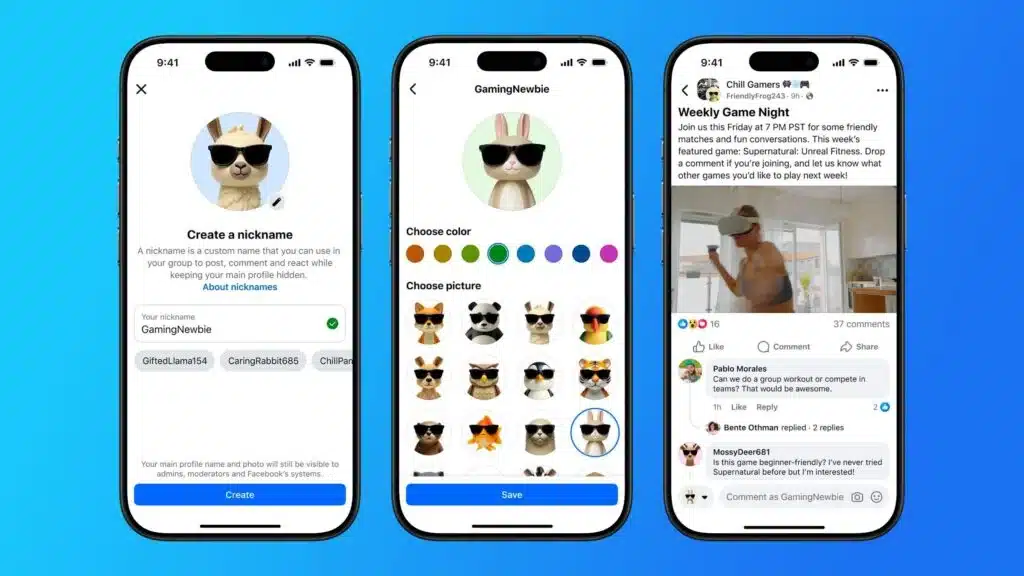
Facebook is rolling out a new naming feature for Groups that lets members participate under a chosen nickname instead of their full real name. The option appears when you create or edit your profile within a specific group, where you can also select a different profile picture tailored to that community.
More Flexibility and Comfort
The goal is to give people more flexibility and comfort when posting in niche or sensitive groups, without always feeling the weight of their full real-world identity on every comment.
At the same time, these nicknames are still tied to your underlying Facebook account on the backend, so they remain attributable if there are moderation or safety issues.
How Nicknames Work in Facebook Groups
When you set up a nickname in a group, Facebook will suggest possible monikers you might want to use, or you can choose your own. You can also select an incognito-style avatar to further distinguish your group presence from your main profile.
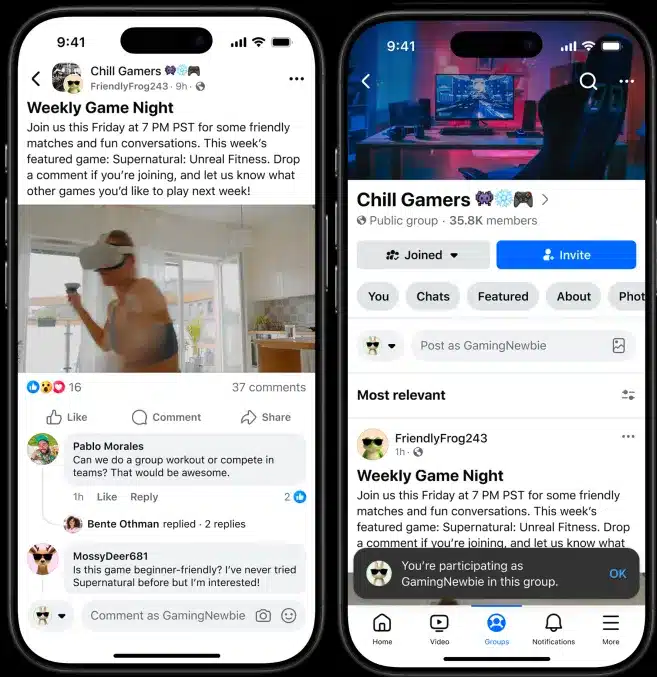
Once configured, that nickname and avatar become your visible identity in that specific group (or groups), representing you in threads and discussions there. It’s a lightweight way to segment your identity across different communities, without spinning up entirely separate accounts.
Nicknames vs Anonymous Posting
Facebook notes that nicknames are different from its existing anonymous posting options, which are only available in certain communities and are geared toward one-off, sensitive questions. Anonymous posts typically hide your identity from other members for that single interaction.
Nicknames, by contrast, are meant for ongoing participation: you build a consistent persona in the group, while still shielding your real name from other members.
This can be particularly useful for people exploring personal, health, work, or interest-based topics where they want some privacy but still want a recognizable presence over time.
Benefits and Potential Risks
On the positive side, this update could lower the barrier to entry for people who are hesitant to join conversations because of stigma, professional concerns, or personal boundaries.
For many users, having that extra layer of separation can make groups feel safer and more approachable. However, there’s also a risk that some people may try to misrepresent who they are, or use nicknames to push the edges of group rules.
Facebook says it will continue to monitor for misuse and policy violations, and because nicknames are linked to real accounts, there’s still an enforcement path if someone crosses the line.
Availability Across Facebook Groups
According to Facebook, the nickname feature is now available across all Facebook Groups. If you’re a group admin or member, you should start seeing the option when you view or edit your group profile, giving you a bit more control over how you show up in each community you’re part of.