
Washington, D.C. — The U.S. Department of Justice (DOJ) has become the center of a major political and legal controversy in early 2026 over its handling of the release and redaction of millions of pages of files related to financier Jeffrey Epstein, who died in jail in 2019. The dispute has widened from procedural questions about document disclosure to accusations of obstruction, cover-ups, surveillance of lawmakers, and systematic mishandling of victim privacy protections.

Background: The Epstein Files Transparency Act and DOJ Release
In November 2025, the U.S. Congress passed the Epstein Files Transparency Act, which required the Attorney General to publicly disclose all unclassified DOJ documents relating to Epstein’s investigations within 30 days of enactment. The law defined limited exceptions to redaction, primarily victim privacy, material depicting abuse, or national security, and prohibited withholding information purely for reputational protection.
Although the DOJ released an initial tranche of documents in December 2025 and a much larger batch of roughly 3.5 million pages, 180,000 images, and videos on January 30, 2026, critics argue the release ultimately violated both the spirit and the letter of the statute. Lawmakers and advocacy groups contend that the department failed to unredact materials linking powerful figures to Epstein’s network and simultaneously released files that exposed sensitive victim information without adequate safeguards.
What the DOJ Did and Alleged Missteps
- Delayed Compliance: The law imposed a 30-day deadline for release by December 19, 2025. The DOJ’s staggered rollout and later large-volume disclosure were criticized as untimely and non-compliant, even without explicit penalties in the statute.
- Redaction Controversies: Despite the Act’s restrictions, lawmakers reported extensive redactions that appeared to shield high-profile individuals’ names and communications. During a secure review session, six names were reportedly identified by Members of Congress that should not have been redacted under the statute, intensifying claims that the DOJ withheld key information without justified legal basis.
- Victim Privacy Breaches: Many victims’ names, images, and even identifying details such as email addresses and Social Security numbers were reportedly published in the publicly accessible files, prompting immediate outcry from victims, legal representatives, and advocacy groups. In response, the DOJ removed thousands of documents for further review and redaction correction.
- Procedural Errors: A separate gaffe involved unintentional disclosure of an undercover FBI agent’s identity in a file released online, which DOJ officials quickly sought to have removed after recognizing the error.
Congressional Backlash and Legal Accusations
The controversy reached a peak on February 11, 2026, when U.S. Attorney General Pam Bondi faced a highly charged House Judiciary Committee hearing. Lawmakers from both parties criticized her leadership and the department’s conduct, with several accusing the DOJ of procedural failures and even cover-ups.
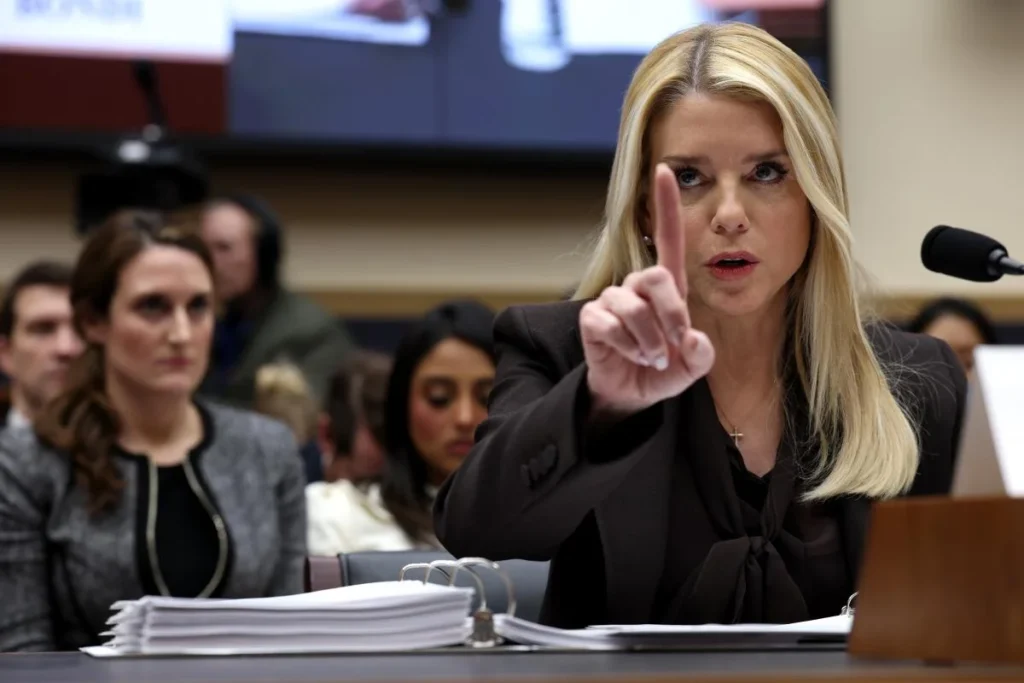
Key accusations leveled by lawmakers include:
- Obstruction or Noncompliance with Law: Critics contend that the DOJ’s partial and delayed disclosures, redaction practices, and overall timeline violated the clear statutory command of the Epstein Files Transparency Act.
- Selective Redaction and Shielding Influential Figures: Members of Congress claimed that redactions protected wealthy, politically connected individuals rather than focusing strictly on permissible victim privacy exceptions.
- “Spying” on Lawmakers: Representative Jamie Raskin and others demanded an inspector general investigation after allegations emerged that the DOJ was tracking congressional searches of the released documents, raising constitutional and separation-of-powers concerns.
- Inadequate Protection of Victims: Some lawmakers and survivors condemned the department for exposing victims’ identities, with no clear plan initially in place to correct or mitigate the harm.
- Reluctance to Investigate Prominent Allegations: Heated exchanges focused on questions about whether the DOJ would pursue further investigations into individuals whose names appeared in the files, including allegations that were previously uninvestigated or settled civilly.
Bondi was also accused of deflecting responsibility, at times blaming predecessors or the volume and complexity of the files rather than acknowledging institutional mismanagement. Her testimony, described by some lawmakers as evasive or combative, further fueled calls for independent oversight of the department’s actions.
Legal and Institutional Implications
The debate over the Epstein files has several important legal dimensions:
- Statutory Compliance: The controversy raises questions about the enforceability of the Epstein Files Transparency Act where no explicit enforcement mechanism or penalty was mandated. Defenders cite the DOJ’s press releases asserting compliance, while critics argue that compliance must be assessed by courts or congressional oversight mechanisms.
- Separation of Powers: Allegations of document tracking, oversight interference, and withheld information implicate separation-of-powers norms, potentially triggering inspector general reviews or even federal litigation over interbranch authority.
- Privacy and Evidence Law: Missteps in redaction highlight the complexity of balancing transparency with legal protections for victims, implicating both statutory privacy standards and constitutional concerns under the Privacy Act and federal evidentiary rules.
- Institutional Trust in DOJ: Perceived partisan handling of sensitive materials, particularly allegations of favorable treatment toward political allies or deflecting accountability, has broader implications for public trust in prosecutorial independence and the rule of law.
What Happens Next
Lawmakers have signaled multiple potential follow-up actions, including:
- Requests for an inspector general investigation into whether the DOJ improperly monitored congressional access (and whether that tracking was legally justified).
- Further oversight hearings and demands for unredacted releases that fully comply with statute.
- Possible litigation by victims or advocacy groups seeking judicial enforcement of the transparency act.
- Ongoing internal DOJ reviews to refine redaction protocols and ensure victims’ identities are protected before re-release of previously handled files.
The Epstein files controversy has evolved from a statutory compliance matter into a substantive legal and political conflict over transparency, accountability, statutory interpretation, privacy protections, and the role of the Department of Justice in administering politically sensitive disclosures. Critics argue that mismanagement of the files undermines both victims’ rights and public confidence, while defenders emphasize logistical challenges and complexity in processing decades’ worth of voluminous documents. The issue continues to unfold in Congress, in the courts, and in the court of public opinion.