
A Tunisian man has been sentenced to death for Facebook posts criticizing the president, sparking global outrage and renewed concerns over free speech rights.
On October 3, 2025, his lawyer and human rights advocates said a Tunisian court had sentenced a 56-year-old man to death for insulting President Kais Saied and threatening state security in posts on Facebook. The ruling represents a record of repression against free speech in Tunisia since Saied seized power in a coup in 2021.
Details of the Case and Defendant
Saber Chouchane, a day laborer with little formal education, was arrested in January 2024. Chouchane’s lawyer, Oussama Bouthalja, said his client’s posts were largely critical, often harsh commentary about the president and his governance, and were intended to capture the “state of living” rather than incite violence.
Bouthalja described the ruling as:
“a shocking and unprecedented verdict.”
The Nabeul court judge convicted Chouchane over comments he made in 2021 deemed disrespectful of the president, the justice minister, and the judiciary, along with charges of spreading false information and incitement under Tunisia’s controversial 2022 cybercrime law, known as Decree 54.
Tunisia’s Tightening Controls on Speech
Tunisia has witnessed a significant erosion of restrictions on political freedoms and the independence of the judiciary since President Saied seized power in 2021. The commonly controversial Article 54, which criminalizes “spreading false news” via the network, has drawn the attention of rights groups for stifling dissent.
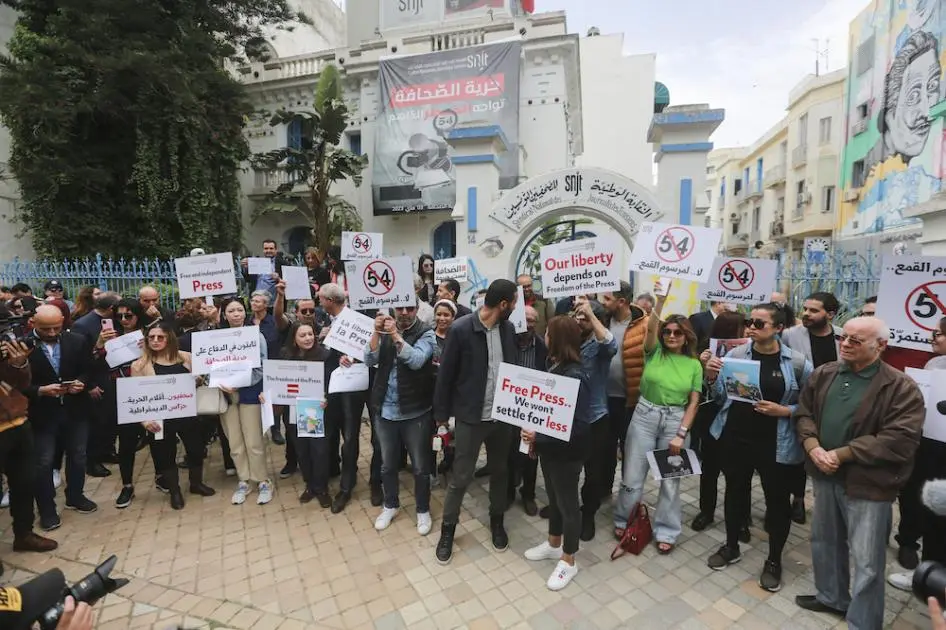
Despite still being legal, Tunisia has not implemented the death penalty in alignment with the law since 1991. This is significant because it is the first instance in which someone has been subjected to such an extreme punishment in response to criticism of the government via social media.
Reaction and Appeal
Family of Chouchane devastated by sentence. That’s what his brother Jamal Chouchane told Reuters:
“I cannot imagine… We are already in poverty, and now we are repressed and persecuted as well”
The defense filed a formal appeal, but the justice ministry had not immediately commented publicly on the ruling.
Widespread Criticism and Impact
News Tunis (TAP) — Rights organizations condemned the ruling as a dangerous new precedent against freedom of expression in Tunisia.
The Tunisian League for Human Rights said such a sentence is part of “unprecedented levels of human rights violations.”
On social media, many Tunisians accused the decision of seeking to intimidate Saied’s critics, with some saying it could create even greater turbulence in an already volatile political context.
Broader Political Climate
The political landscape of Tunisia has become increasingly murky and autocratic since Saied disbanded the elected parliament and assumed rule by decree. Leaders of the opposition are jailed, and protests are crushed with violence.
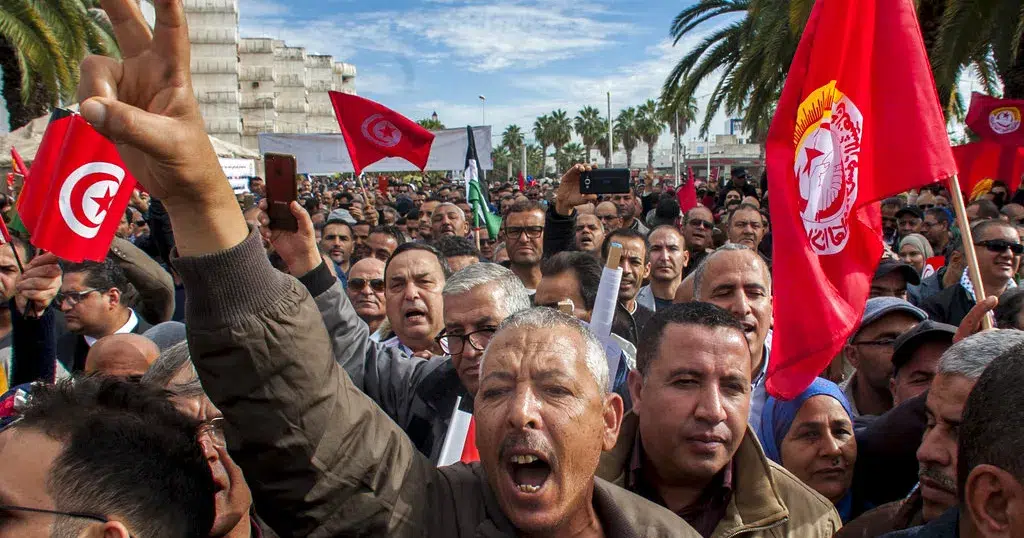
The case is a reflection of how cybercrime laws have increasingly been used as tools to silence dissent and curtail independent voices in a country that has experienced a backsliding of democracy since its 2011 revolution.
Such a landmark death sentence highlights both the dire state of free speech in Tunisia, but by the same token, how dire human rights are amid interest and expediency, as the government feels immense pressure from an array of unprecedented political judicious phase transitions.