
London, England — Prince Harry, Duke of Sussex, has returned to the spotlight of the U.K. legal system in one of the most high-profile civil privacy cases in recent memory, bringing decades of alleged tabloid misconduct before the High Court in London. The trial, which began in January and is expected to run for several weeks, pits Harry and six other public figures against Associated Newspapers Ltd. (ANL), the publisher of Daily Mail, Mail on Sunday, and MailOnline, over claims of unlawful information gathering spanning more than two decades.
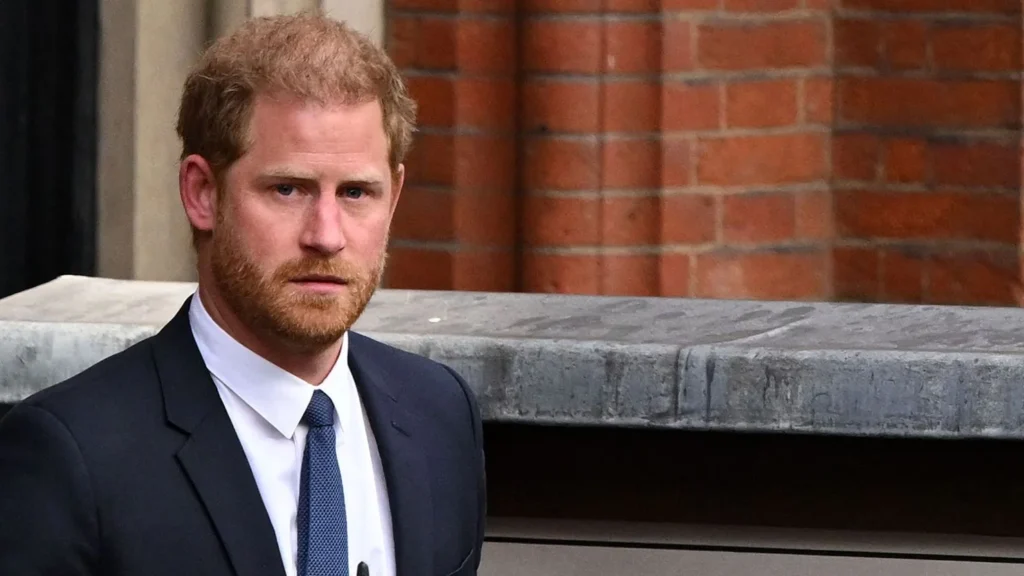
The lawsuit represents Harry’s third major concerted legal offensive against British tabloids and is widely seen as the concluding chapter of his long-running battle against intrusive press behaviour that he, and others, allege contributed to sustained harm, including psychological distress. The case has drawn global attention not just for its celebrity participants but for its potential implications on press conduct, privacy rights, and media regulation in the U.K. and beyond.
The case also unfolds amid heightened scrutiny of editorial governance and institutional accountability within major media organisations, following recent controversies involving public broadcasters and political pressure over editorial decisions, including a high-profile episode in which BBC leadership resigned after Donald Trump threatened legal action over alleged speech editing.
What the Case Alleges
Prince Harry and his co-claimants, among them Sir Elton John, Elizabeth Hurley, Doreen Lawrence, Sir Simon Hughes, Sadie Frost, and David Furnish, contend that Daily Mail newspapers engaged in unlawful information-gathering practices from the early 1990s until at least 2018. These practices are alleged to have included voicemail interception, line bugging, paid access to private information, and other forms of unlawful surveillance and deception to source stories.
Harry’s legal team asserts that these acts went far beyond legitimate journalistic sourcing, extensively invading private conversations, medical and banking records, and highly personal details. The claimants argue that such behaviour not only breached established privacy laws but also inflicted tangible personal and emotional harm, particularly for Harry and his wife, Meghan, Duchess of Sussex.
Associated Newspapers has categorically denied the allegations, arguing that the contested stories were the product of lawful journalistic practices, including interviews, public records, and conventional sourcing. ANL’s defence emphasises that mere publication of unflattering content does not equate to wrongdoing, and that claims of systematic illegal acts are based on insufficient and, in some instances, contested evidence.
Trial Dynamics and Key Testimony
Prince Harry took the witness stand in London’s High Court on January 21, offering emotional testimony about the profound impact he says intrusive reporting has had on his life and relationships. During his roughly two-and-a-half hours under questioning, Harry recounted the distressing consequences of media intrusion, including periods where tabloid coverage contributed to his feeling, a sentiment echoed by the court-reported details of his witness statement:
“paranoid beyond belief.”
Harry’s barrister, David Sherborne, a veteran advocate who has represented him in previous privacy suits, framed the trial not as a personal grievance alone but as a broader fight for accountability and accountability in media conduct. The emotional tenor of Harry’s testimony was underlined by his description of how coverage affected Meghan Markle and others close to him, portraying the case as an effort to demand respect for individual privacy rights against aggressive tabloids.
Shortly after Harry’s testimony, fellow claimant Elizabeth Hurley took the stand, asserting that her rooms had been “bugged” and categorically rejecting defence suggestions that any media leaks came from friends or social insiders, a contention ANL raised to rebut claims of unlawful information gathering.
Historical and Legal Context
This trial builds on Harry’s earlier legal battles with the British media. In recent years, he has brought successful actions against other publishers, including Mirror Group Newspapers (MGN) and News Group Newspapers (NGN), resulting in damages and formal apologies.
Those cases helped establish precedents for civil liability in cases involving unlawful practices such as phone hacking and overreach by tabloids, practices most infamously revealed in the News of the World phone-hacking scandal.
Yet this case is broader, implicating one of the U.K.’s most influential tabloid groups and extending over a much longer period, with claims centred on systematic wrongdoing rather than isolated incidents. That raises the stakes not only for Harry but for all claimants and the newspaper industry itself, potentially shaping future privacy litigation and press standards.
Legal Issues at the Heart of the Case
At its core, the litigation hinges on three main legal questions:
- Whether the defendant engaged in unlawful information-gathering practices — such as voicemail interception (“blagging”), telephone bugging, or paid access to private information, that violate established UK privacy and data protection laws.
- Whether the actions attributed to ANL caused compensable harm — including distress, reputational damage, or financial loss to Harry and the other claimants.
- Whether legitimate journalistic activity can be legally distinguished from unlawful intrusion in this context.
English civil privacy law provides avenues for redress where unlawful intrusion is shown, but plaintiffs must meet stringent evidentiary standards. The court’s judgment will hinge on the credibility of witness accounts, documentation of alleged misdeeds, and legal interpretation of what constitutes unlawful newsgathering versus legitimate press activity.
Potential Outcomes and Legal Implications
The trial, expected to last up to nine weeks, could result in several possible outcomes:
- Victories for Claimants: If successful, claimants could receive compensatory damages and possibly punitive orders, setting a significant precedent for privacy litigation and press conduct in the UK. Such a result could spur further legal action by other public figures alleging misconduct by media organisations.
- Partial Awards: The court might find liability in some specific instances without fully endorsing the claimants’ broader narrative, a nuanced result that would still signal meaningful judicial scrutiny of tabloid conduct.
- Defence Success: If the judge finds that ANL’s actions were lawful or that evidence of wrongdoing is insufficient, the case could reaffirm robust protections for press freedom and sourcing. Such an outcome might dampen the momentum of privacy litigation but could also rally calls for legislative reform.
Broader Significance Beyond Harry’s Case
This litigation represents a collision point between two fundamental principles of modern society:
- Freedom of the press.
- Individual privacy rights.
A ruling in favour of Harry and his co-claimants could embolden similar lawsuits and contribute to evolving legal standards governing media conduct and accountability in the digital age. Conversely, a ruling favouring ANL would reaffirm strong protections for editorial discretion and journalistic investigation, albeit with ongoing debate over ethical boundaries.
Prince Harry’s privacy case against the publisher of Daily Mail and related outlets is more than a personal legal battle; it is a litmus test for how 21st-century democracies balance press freedom with individual rights in an era of pervasive media intrusion.
As the trial unfolds over several weeks, its findings are likely to reverberate across legal, journalistic, and public spheres ,shaping how privacy rights and press conduct are understood and enforced in the United Kingdom and potentially beyond.
Timeline of Prince Harry’s Privacy Litigation Against UK Tabloids
1990s–2010s: Alleged unlawful tabloid surveillance and information-gathering targeting Prince Harry and others
2011: Phone-hacking scandal exposes systemic media misconduct in the UK
2019–2020: Prince Harry launches coordinated civil actions against British tabloids
2023: High Court rules partly in Harry’s favor against Mirror Group, awarding damages
Oct 2023: Harry joins claim against Associated Newspapers alleging decades of privacy violations
2024: High Court rejects key strike-out attempts, allowing the case to proceed
Jan 2026: Trial begins in London before the High Court
Jan 2026: Prince Harry testifies on emotional and privacy harms
2026 (Expected): Judgment anticipated, with potential damages and wider media-law impact